Maine Forced Air
Profile view of a bearded man wearing a dark green baseball cap and a dark gray T-shirt against a plain light background.

Furnace on but house still cold in Maine

Step 1 of 3: Equipment

A furnace that runs but never warms the house usually means heat is being made but not delivered, or not made well enough to keep up. A clogged filter or blocked vents can choke airflow until warm air can't push through the ducts. A failing blower motor moves too little air to matter. If you heat with oil, as most homes in Maine do, a dirty nozzle or a weak pump can leave the burner struggling to get a full, hot flame going, and a furnace running on a half flame will never catch up on a cold day. Thermostat problems look like this too: a sensor reading the wrong room temperature will cycle the furnace off before the house is actually warm. On a night when it's well below freezing outside, even a small drop in output is enough to lose the room. None of this means the furnace is done. It means something specific inside it needs a repair.

A gray high-efficiency furnace in a basement with PVC venting pipes, a yellow gas line, metal ductwork, concrete walls and floor, and a wood-framed stairway at left.
Short cycles that end before the house catches up, pushing warm air out in bursts instead of a steady run.
A beige furnace with a louvered front panel and metal ductwork stands on a concrete basement floor beside pipes and a white cylindrical water heater.
A blower that stays on but barely moves warm air, or a flame that's weaker than it should be with oil this cold outside.
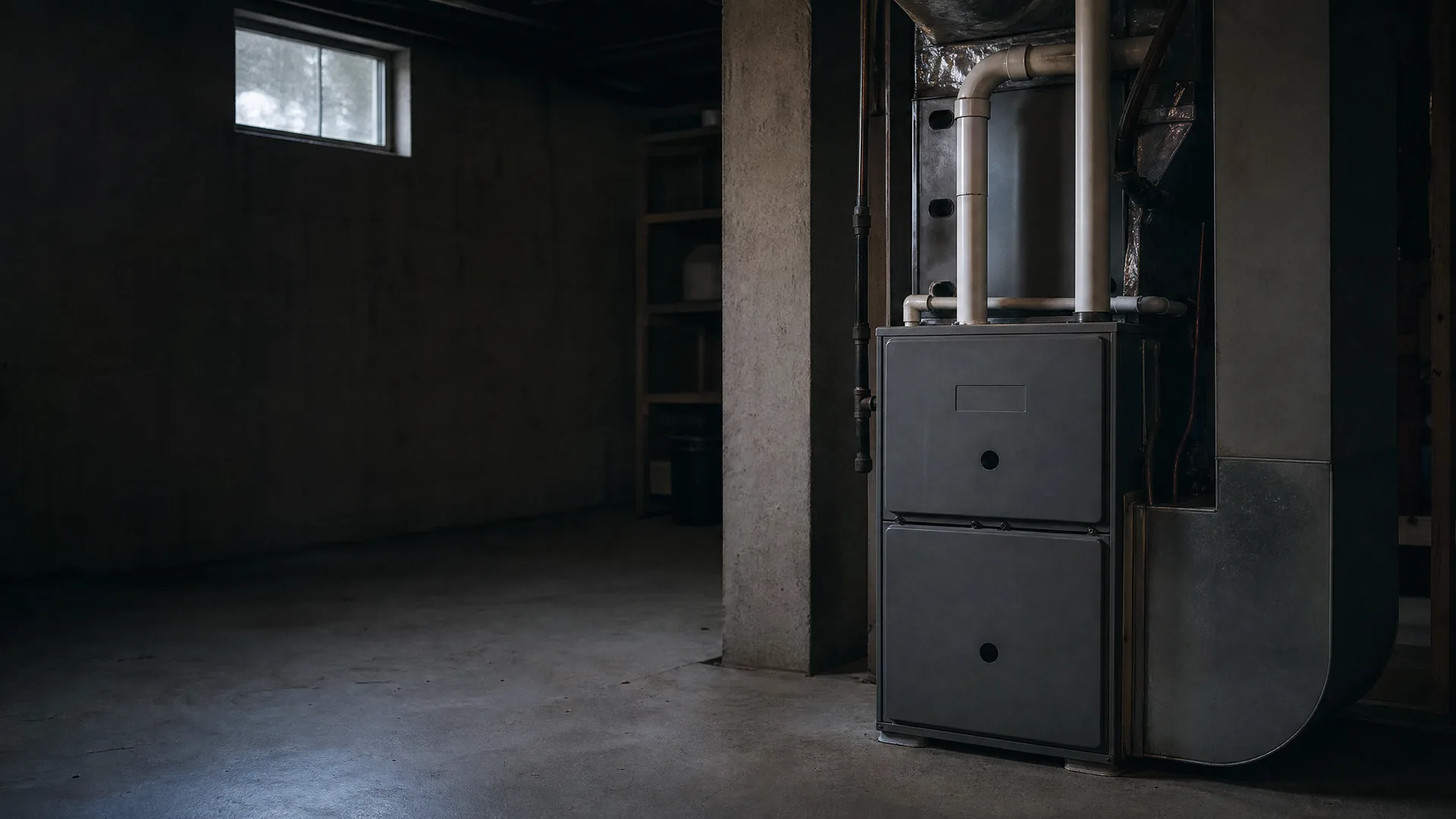
A gray high-efficiency furnace with white PVC vent pipes and attached ductwork stands beside a concrete support column in a dim, empty basement with bare concrete walls and floor and a small window.

The thermostat reads sixty-eight but it's not sixty-eight down here. You go down to check on the furnace around eight at night, past the boxes stacked by the stairs, and the burner isn't firing. No hum, no smell of oil burning, nothing. Just the dust sitting still in the beam of your flashlight, lit up like it's hanging in the air instead of falling. Outside it's already deep into a Maine November, the kind of cold that gets into a house fast once the sun's down. You put your hand on the furnace casing. Cold metal. Upstairs the heat's been running all evening and the living room still has that edge to it, the one that makes you reach for a sweater instead of turning up the dial again.

Why does my house feel cold with the furnace running?

You turn the thermostat up and the furnace answers, but the rooms stay cold. Maybe the air coming out of the vents feels lukewarm instead of hot. Maybe one room warms up fine while another never does. You might hear the burner cycling on and off every few minutes instead of running a steady stretch. Or you walk by the thermostat and it says sixty-eight, but your hands are cold at the kitchen table. With oil prices what they are and power costs among the highest in the country, a furnace that runs without heating the house is burning fuel for nothing. Left alone, that usually gets worse before it gets better, and the parts working hardest to compensate are the ones most likely to fail next.

A gray high-efficiency furnace stands on a concrete basement floor beside galvanized sheet-metal ductwork, with white PVC vent pipes, gas and water lines, and unfinished wood framing behind it.

Running the way it should

A clean burn and steady airflow at every vent, the kind of setup that holds sixty-eight through a Maine night without the oil tank taking the hit it would otherwise take.

A beige furnace with two louvered front panels stands on a concrete basement floor beside galvanized ductwork, metal pipes, and a wooden post.

Running, but not keeping up

The burner fires and the blower moves air, yet the ducts aren't carrying enough heat to the rooms that need it. That gap is what a repair visit is meant to find and close.


Get It Looked At or Ride Out the Cold

Call for repair

  • The burner struggles to keep rooms at sixty-eight even with the thermostat set higher and the furnace running most of the night.
  • Oil use climbs noticeably because the furnace runs longer to make up for heat it can't deliver through the vents.
  • One or two rooms stay cold no matter how long the furnace runs, while the rest of the house is fine.
  • The furnace short cycles, shutting off and firing again every few minutes instead of running a steady stretch.
  • A repair technician can trace whether the problem is the blower, the burner, a blocked duct, or something electrical.
  • Left alone, a furnace working harder than it should tends to wear out the parts carrying that extra load.

Live with it for now

  • You keep layering on sweaters and space heaters in the room that never warms, and call it manageable.
  • The oil bill creeps up a little each month and you tell yourself it's just the cold this year.
  • Rooms that run cold stay cold through the rest of the winter, since the problem doesn't fix itself.
  • You lose evenings calling around for someone who can look at the furnace, explaining the same problem more than once.
  • A furnace running harder than it needs to for months adds wear to parts that weren't the original issue.
  • Sorting through quotes and schedules on your own takes time you'd rather spend elsewhere once the cold sets in.
A bearded man in a dark navy sweater over a collared shirt smiles and looks off to the side while seated at a dinner table with a glass of red wine, a lit candle, and a plate of food in the foreground of a dimly lit room.
A woman in a dark gray sweater reclines on a couch with her eyes closed and a knit blanket over her lap, an open book resting face-down in front of her, with a lit table lamp and shelving blurred in the background.

Matched to your furnace job

Describe what your furnace is doing once, in one form.

You're not committing to anything by asking.

A woman in a cream sweater with her hair in a bun laughs while seated at a stone counter holding a glass of red wine, in a dimly lit interior with a sofa, houseplants and a large window at night.
A woman with long dark hair in a cream knit sweater laughs while looking off to the side, seated in front of a dimly lit kitchen with an island, stools, open shelving and a potted plant, with a glass of red wine in the foreground.
A smiling woman with long dark wavy hair in a light knit sweater sits at a marble counter with a glass of red wine, with a dimly lit living room and kitchen in the background.
A smiling woman with long wavy brown hair in a beige sweater sits at a white marble counter with a glass of red wine, with a living room, dining table and kitchen cabinets behind her.
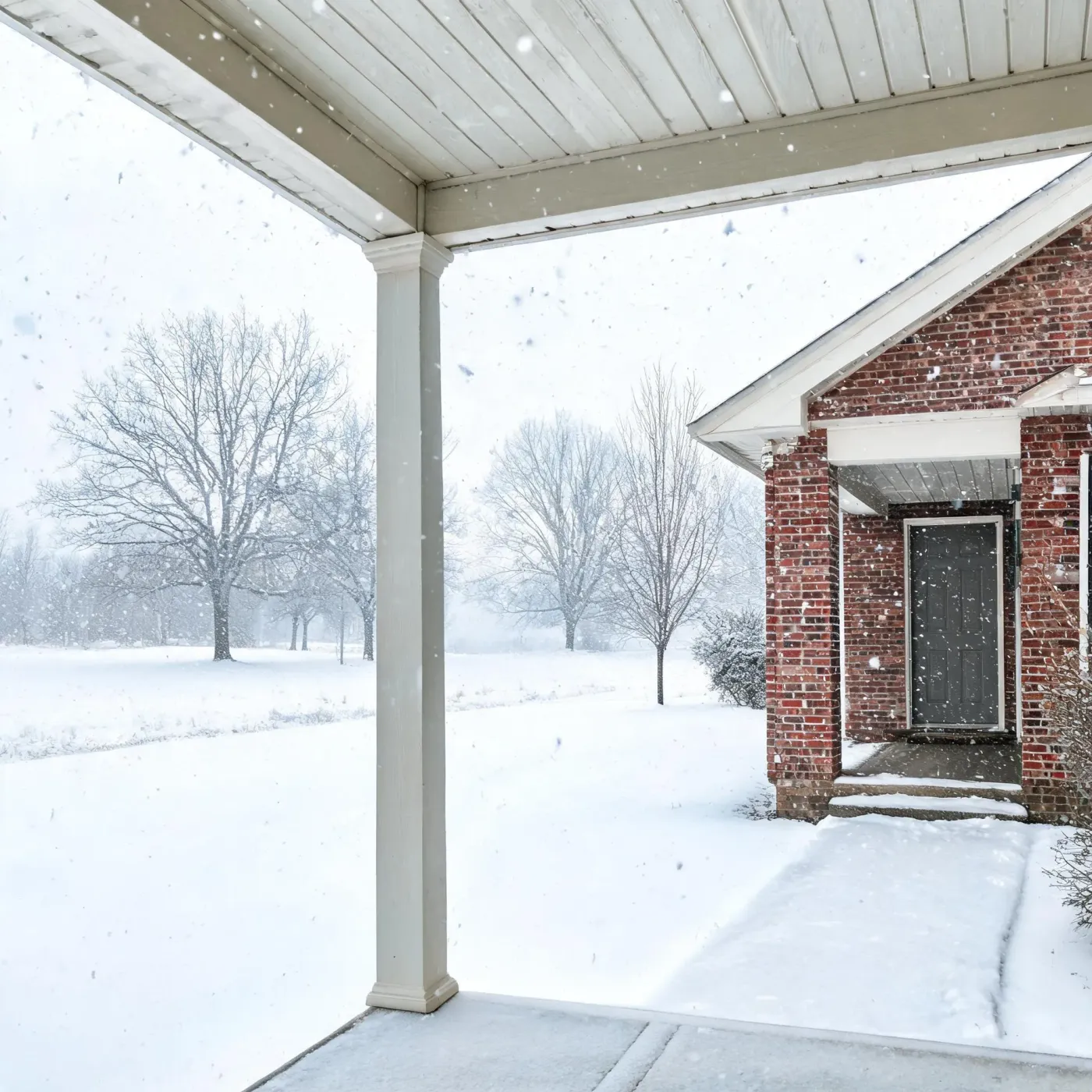
View from under a covered porch with a white column toward a red brick house with a dark door, with falling snow, snow-covered ground and bare trees in the background.

Statewide, winter nights average 13°F, according to NOAA climate data. At that temperature a furnace that's struggling doesn't just run longer, it falls behind and stays behind. The burner is firing most of the night trying to hold sixty-eight, and if the heat exchanger or blower isn't keeping pace, the house loses ground faster than the furnace can make it up. You'll feel it as a draft near the windows that wasn't there in October, or a bedroom that never quite gets warm no matter where the thermostat is set. The oil tank empties faster too, since the furnace is working harder for the same result.

NOAA nClimDiv 1991-2020 county normals weighted by homes

Why does my furnace blow air that isn't even warm?

You stand by the vent and the air is moving, you can feel that much, but it isn't hot, not even close to what it should be when the furnace has been running a while. In an oil furnace that usually points to the burner itself rather than the ducts or the blower, and it's worth knowing which before you decide what to do about it.

The burner isn't heating the oil enough before it sprays it

An oil furnace works by firing a fine mist of oil into the combustion chamber and igniting it. If the nozzle is worn or partly clogged, the spray pattern breaks down and the flame burns weak and uneven instead of hot and steady. The blower still runs on schedule, pushing that same weak heat through the ducts, so what reaches the vent is air that's warmer than the room but nowhere near what sixty-eight needs on a cold Maine night. A dirty nozzle, a bad draft, or soot built up on the heat exchanger can all do this. None of it clears up on its own, and oil burned this way is oil wasted, which matters when every gallon here costs what it does.


A beige residential furnace stands on a concrete basement floor beside galvanized sheet-metal ductwork, a round flue pipe, copper gas piping, and a PVC condensate line, with a wood-paneled wall at right.
Before you get your furnace repair
A gray high-efficiency furnace in a basement with white PVC vent pipes, sheet-metal ductwork, copper and black piping, a condensate pump, and insulated walls above a concrete floor.
After you get your furnace repair

Furnace running, house still cold

  • A furnace that runs but doesn't warm the house means something inside it is failing even while it keeps firing.
  • The fix is specific to what's wrong, a dirty filter, a weak blower, a burner that isn't firing clean, not a single repair.
  • Finding a contractor on your own means calling around, explaining the same problem each time, and sorting through quotes.
  • Getting matched skips that work, a contractor who serves your area reaches out to you directly.
  • At 13°F outside, a furnace that's behind stays behind, and every night it runs weak costs more oil.
  • The thermostat reading 68 doesn't mean the house is 68, and the furnace running doesn't mean it's working.

A furnace that keeps firing but never warms the house isn't working the way it should, even if it sounds fine from upstairs. Somewhere between the burner and the vents, something is falling short, a clogged filter choking airflow, a blower too weak to move the air, a flame that isn't burning clean. Which one it is changes what gets fixed, and a furnace guessed at and patched wrong keeps burning oil without closing the gap. That gap costs more the longer it runs, especially on a night near 13°F when a furnace behind schedule never catches back up.

The usual way to deal with this is calling a few oil companies or repair outfits, explaining what the furnace is doing, waiting on callbacks, then doing it again with the next one because the first one didn't have anyone free this week. Each call means describing the same symptoms from the start, the lukewarm vents, the room that won't hold 68, the burner cycling short. Then there's sorting through whatever quotes come back, with no easy way to tell if they're even quoting the same job.

Getting matched with a contractor skips that part. You describe the problem once, and a contractor who works in your area gets in touch with you instead of the other way around. The furnace still needs a real diagnosis and a real fix, that part doesn't change. What changes is not having to find someone to do it.


A covered porch with a wood front door with six upper glass panes, a lantern wall sconce, tapered column on a stone base, potted ferns and flowers, a woven doormat, and wide steps leading to a paver walkway bordered by shrubs and white hydrangeas.
A beige upholstered sofa with a cream cushion and chunky knit throw sits beside a white-framed window, with a leafy potted plant in a stone vase against a tan wall.
Sunlit corner of a room with a linen curtain beside a window, built-in shelves holding ceramic vases, wooden bowls, a potted green plant, stacked books and a woven basket, above a textured rug.
A dark wood three-drawer dresser against a pale wall holds a tall ceramic vase with leafy branches, stacked books and a shallow bowl, with a framed print above, a woven basket on the wood floor at left, and an upholstered sofa with a green pillow in the foreground.
A cream upholstered sofa with a textured ivory cushion and a rust-colored cushion sits beside a window with sheer linen curtains, with a potted leafy plant behind it and a wooden bowl on a wood table in the foreground.

A furnace pro near you

Answer a few questions instead of calling shop after shop.

Answer a few questions

It costs nothing to send, and you don't have to hire anyone.