Tell us about the job
Takes about a minute. No obligation.
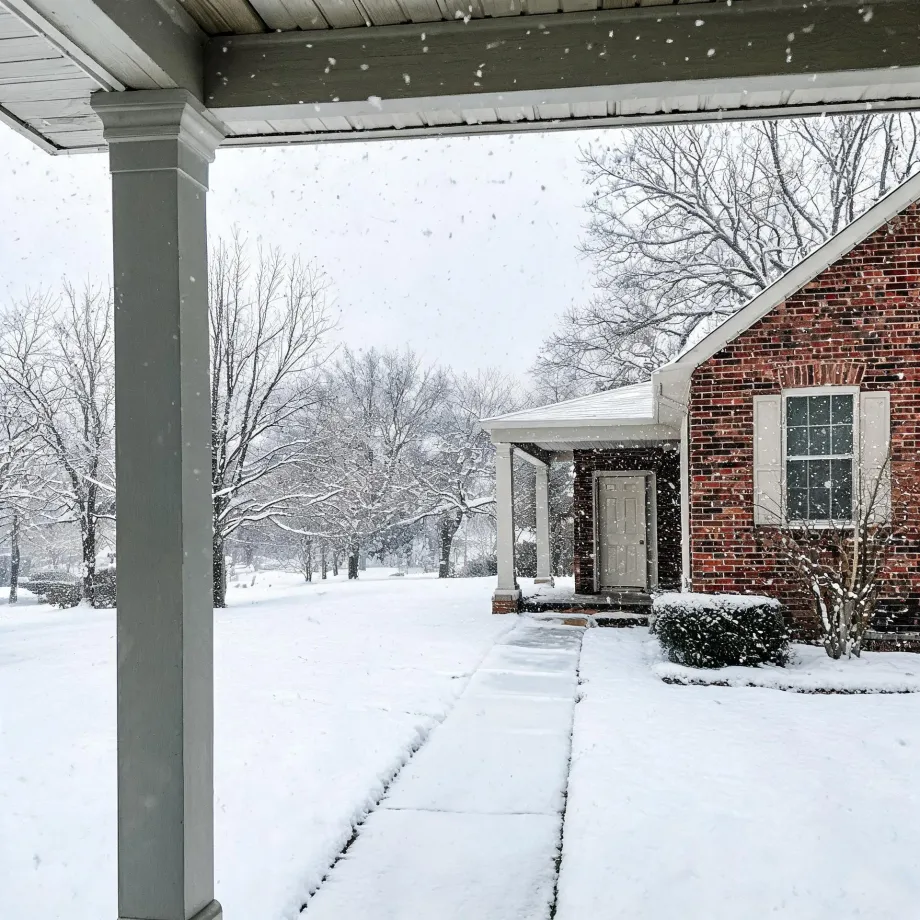
A furnace repair here is rarely a single failed part with nothing else to consider. Homes in Androscoggin County, ME run heat about nine months a year, from September through May. The burner, heat exchanger, and ignition system cycle on and off through a long run each year, and that cycling is where wear accumulates. By the time a component gives out, a contractor has to look at the surrounding parts to judge what else is close to the edge. A quote that skips that step often undersells the job.
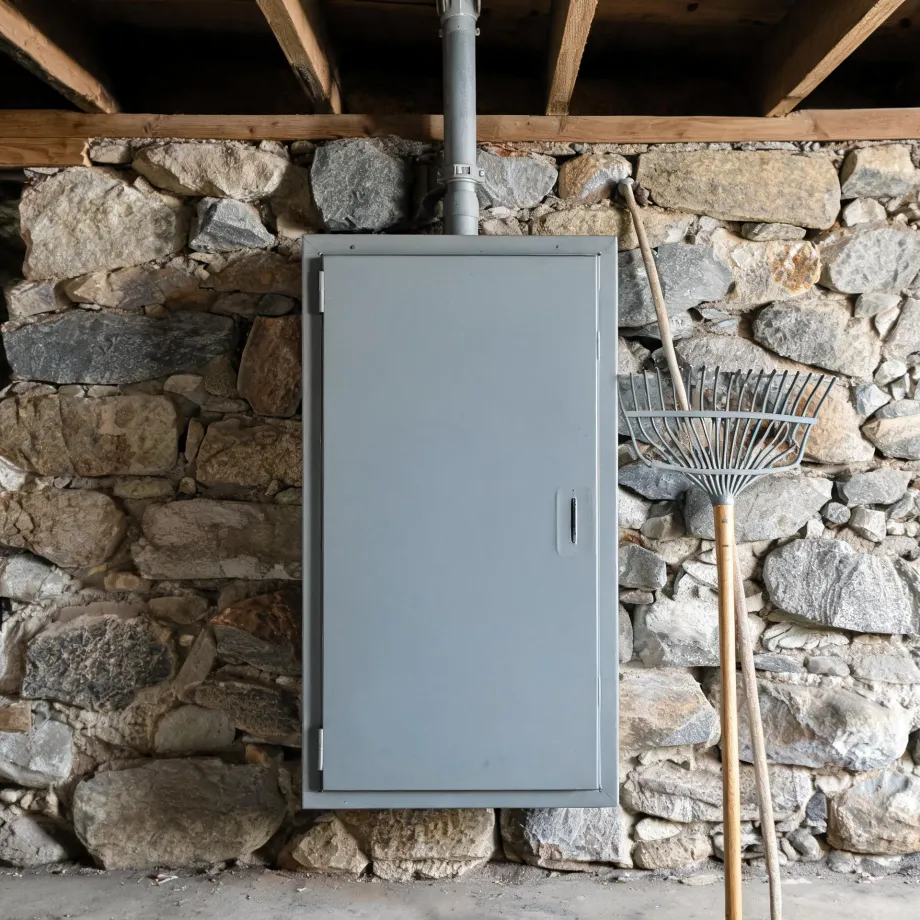
Furnaces in housing stock this old carry a specific repair profile. Half the homes in Androscoggin County, Maine were built in 1969 or earlier (2020-2024 ACS 5-year). A unit that has run through that many heating seasons tends to show cracked heat exchangers, worn inducer motors, or failed limit switches before the homeowner knows there is a problem. When a contractor opens the unit, the question is whether the parts it takes are still manufactured to spec or whether substitutes are being fitted to an assembly they were not originally made for. That gap between the original component and what is now available decides the repair scope.
The Parts of a Furnace a Contractor Checks First
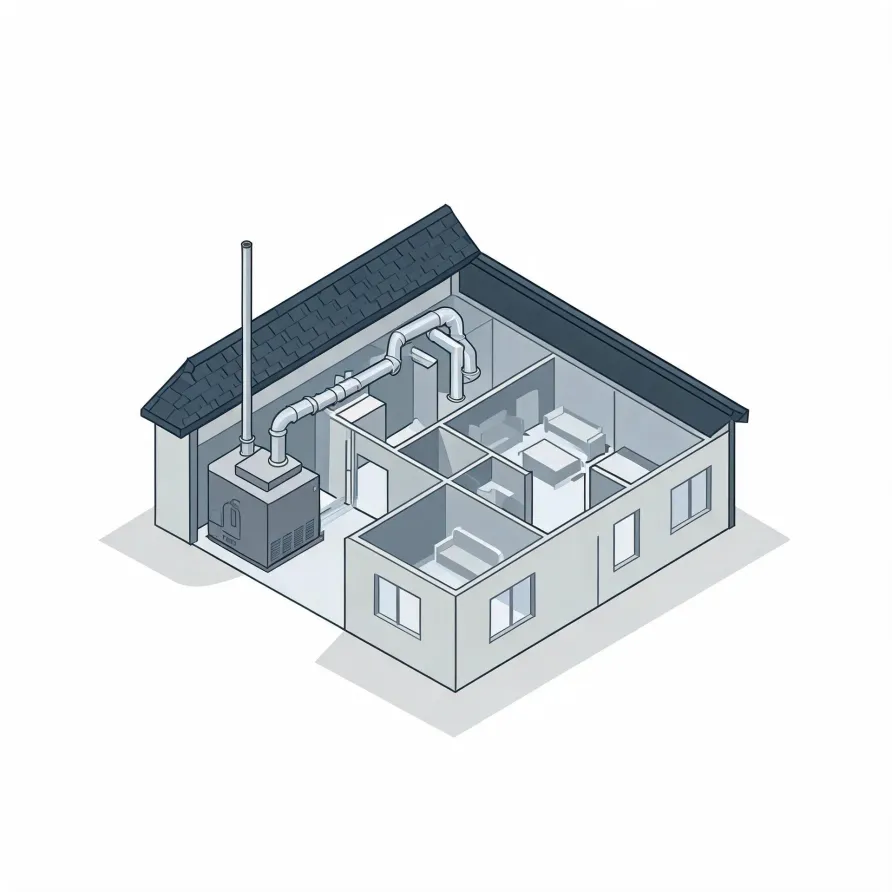
The furnace itself sits in a mechanical room, basement, or utility closet and is the piece that produces heat. Inside it, the heat exchanger is the part a contractor looks at closely during a repair call, because a crack or failure there is what stops warm air from reaching the rest of the house. The burner assembly and igniter sit within the same cabinet and are common sources of no-heat calls.
The blower motor lives at the base of the furnace cabinet and pushes conditioned air into the supply side of the duct system. The flue pipe runs from the top or rear of the unit to the outside, carrying combustion gases out of the house. The thermostat on a wall in the living space is the control point, and a wiring or calibration fault there can mimic a furnace problem entirely.
The drawing shows a typical layout, and a licensed contractor will assess which components apply to your specific system and home.
Find a contractor in Androscoggin CountyAndroscoggin County, by the numbers
110 severe weather events were recorded in Androscoggin County, Maine between 2015 and 2024.
NOAA National Centers for Environmental Information, Storm Events Database, bulk CSV export, events 2015-01-01 through 2024-12-31.Half the homes in Androscoggin County, Maine were built in 1969 or earlier (2020-2024 ACS 5-year).
U.S. Census Bureau, 2020-2024 American Community Survey 5-Year EstimatesAndroscoggin County, Maine holds 50,471 housing units (2020-2024 ACS 5-year).
U.S. Census Bureau, 2020-2024 American Community Survey 5-Year EstimatesOwners occupy 67.9% of the occupied homes in Androscoggin County, Maine (2020-2024 ACS 5-year).
U.S. Census Bureau, 2020-2024 American Community Survey 5-Year EstimatesCodes & Standards Behind Furnace Repair in Androscoggin County, Maine5 sourced rules and standards
What HVAC Repair Looks Like in Androscoggin County
Non-weatherized gas furnaces manufactured on or after November 19, 2015 must reach 80.0 percent AFUE.
Non-weatherized oil-fired furnaces manufactured on or after November 19, 2015 must reach 83.0 percent AFUE.
Mobile home gas furnaces manufactured on or after November 19, 2015 must reach 80.0 percent AFUE.
Non-weatherized gas furnaces manufactured on or after December 18, 2028 must reach 95.0 percent AFUE, up from the 80.0 percent minimum that applies to units manufactured before that date.
Licensing and Legal Requirements in Androscoggin County, Maine
Maine licenses the fuel-burning side of heating rather than HVAC as a trade: a Maine Fuel Board licence is required to install or service solid fuel, oil, propane or natural gas burning equipment, including pellet-fired central heating appliances. Air conditioning is not named anywhere in the chapter.
Severe Weather Events in Androscoggin County
Hard weather puts hours on a furnace fast. What the climate delivers here shapes how hard local equipment works and how often it needs attention.
110 severe weather events, 2015–2024. Source: NOAA National Centers for Environmental Information, Storm Events Database.