A dark gray furnace with two access panels stands in a basement, connected to galvanized sheet-metal ductwork and PVC pipes, with exposed wood framing and a bare bulb light in the background.

Skip calling around

Repair or replace an aging furnace in Maine

An oil furnace that's struggling doesn't always need a new one, but in Maine, waiting too long on that decision can cost you through a hard winter. This page walks through what tends to fail on an aging furnace and when replacing it makes more sense than another repair. Instead of calling around to different oil companies and contractors, explaining the same problem each time and weighing quotes against each other, you can get a read from a local contractor who works on furnaces like yours all winter.

Skip the calls

Most furnaces in Maine run fifteen to twenty years before something major gives out, and what usually fails first is the heat exchanger, the igniter, or the blower motor. If your furnace is in that age range and burning oil at twice the rate it used to, or short cycling, or leaving rooms cold while it runs, that's the exchanger cracking or the burner struggling to light clean. A repair can get you through this winter if the furnace is still fairly young and the problem is one part. Past fifteen years, you're often paying to fix one thing while the next thing is already wearing out, and a cracked heat exchanger on an oil furnace isn't something to patch and hope. The decision usually comes down to how many winters you expect to get out of what's left, and whether the repair bill this time is worth it against a furnace that's going to need another one next year.

A smiling bearded man in a navy sweater sits at a candlelit dinner table with a glass of red wine, a bowl of salad, and plates of food in the foreground.
A woman with dark hair in a bun reclines on a sofa with her eyes closed, wrapped in a cream fleece blanket, a closed blue hardcover book resting in front of her, with a lit lamp and a vase of dried flowers in the background.

Oil furnaces work by sparking an igniter that lights oil sprayed as a fine mist through the nozzle. That flame heats a metal chamber called the heat exchanger, and your blower pushes air across it and through the ducts into your rooms. Years of heating and cooling cycles take a toll on that metal. Soot builds up on its surface, which makes the furnace burn more oil to put out the same heat, and you'll usually see that in your bill before anything actually breaks. Eventually the metal cracks. Once it does, combustion gas can mix into the air the blower is moving through your house, and at that point a contractor will tell you it needs replacing, not patching. The blower motor fails a different way. Its bearings wear down over the years, and you end up with a furnace that still fires but pushes weak, noisy air instead of real heat. A bad igniter or a dirty nozzle causes a more immediate problem: the furnace won't fire at all, which is a bad way to find out on a cold night.

How an Oil Furnace Fails

  • An oil furnace fires by sparking the igniter, which lights oil sprayed as a fine mist by the nozzle inside the burner.
  • The heat exchanger is the metal chamber that transfers that heat into the air your blower pushes through the ducts, and it cracks if it's run too many years.
  • A cracked heat exchanger can let combustion gas mix into the air your blower is pushing through the house, which is why a cracked one means replacement, not repair.
  • Soot buildup on the heat exchanger makes the furnace work harder to transfer the same heat, and that shows up as higher oil bills before it shows up as a breakdown.
  • The blower motor is what actually moves heat to your rooms, and when its bearings wear out, you get a furnace that fires but blows weak or noisy air.
  • Oil furnaces need a working igniter and a clean nozzle to fire reliably, and either one failing can leave you with no heat on a cold night.
A beige high-efficiency furnace in an unfinished basement, with white PVC vent pipes, a yellow gas line, metal ductwork, and exposed wood framing on a concrete floor.
A furnace running clean fires on the first try and warms the house evenly, no smell of oil, no short cycling.
An older beige furnace with two louvered vent panels stands on a concrete basement floor, connected to galvanized ductwork and a metal flue pipe, with gas piping and flexible conduit on the wall behind.
A furnace left too long leaks exhaust past a cracked heat exchanger and strains to push heat through the ducts at all.

What an Aging Furnace Costs You

  • An oil furnace running near twenty years old will keep costing you more each winter it stays in, since Maine's electricity and oil prices are both high.
  • A cracked heat exchanger can push exhaust into the air your blower circulates through the house.
  • A furnace that short cycles or struggles to fire burns more oil just to hold the same temperature.
  • If the furnace came with the house, you likely have no record of the last time the heat exchanger or blower motor was serviced.
  • Waiting through a cold snap on a furnace already showing these signs risks a breakdown on the night you need heat most.
  • Letting an aging furnace limp along into a hard Maine winter usually ends in an emergency call instead of a planned one.

An oil furnace that's past fifteen years doesn't fail all at once. It fails a little more each month, and in Maine that shows up fast. Oil prices here don't give you room to burn more than you have to, and if the furnace is short cycling or struggling to fire, it's burning more oil to hold the same temperature in the house. Electricity costs the same way, so a blower motor working harder than it should adds to that bill too.

The bigger risk is the heat exchanger. Once it cracks, it can push exhaust into the air moving through your ducts, and you won't smell it or see it happening. If the furnace came with the house when you bought it, there's a good chance you don't know when that exchanger or the blower motor was last serviced, which makes it harder to judge how much life is actually left.

None of this tends to announce itself before a cold snap. A furnace that's been struggling through milder weather is the one most likely to quit on a night when the temperature actually drops, and that turns a decision you could have made on your own schedule into an emergency call. Waiting on a furnace already showing these signs doesn't save you the cost of dealing with it. It just moves that cost to the worst possible time to pay it.

An older gas furnace with two louvered front panels stands on a concrete basement floor beside galvanized sheet-metal ductwork, pipes, and a weathered concrete wall.
Before you get your furnace installation
A gray high-efficiency furnace in a basement, connected to sheet-metal ductwork on the left and white PVC vent pipes above, with black gas and drain piping and an exposed wood-stud wall with OSB sheathing on the right.
After you get your furnace installation

Describe it once

Once you know your furnace is on its way out, the work still ahead is finding someone to put a new one in. That usually means searching for oil furnace contractors near you, calling each one to ask if they even service your area, explaining the same symptoms, the same age of the unit, the same oil bills, over and over, then waiting on quotes that come in different formats at different times and trying to line them up against each other. In a Maine winter, that can eat the week you don't have. This page sends your request to one licensed local contractor, someone who works on oil furnaces all season here and has seen what a heat exchanger or igniter looks like after fifteen winters in this climate. You explain your furnace once. No flood of calls from five companies competing for your number, just one who already knows what you're dealing with before they walk in the door.

A gray high-efficiency furnace with white PVC vent pipes stands against a concrete basement wall beside sheet-metal ductwork, a small condensate pump on the floor, and exposed wood framing at left.

Running the way it should

This is what a furnace in good shape looks like: clean PVC venting, ductwork that's sound, a condensate line draining the way it's supposed to. It fires on demand and heats the house without drama, and there's nothing here that needs your attention tonight.


A gray sheet-metal furnace with flue pipe and adjacent ductwork stands against a stone basement wall on a concrete floor, with white PVC and metal pipes running nearby.

Running on borrowed time

Older basement furnaces like this one often share the room with gas lines, flex tubing, and condensate pipes crowded in around an aging cabinet. Stone and block walls don't cause a furnace to fail, but a unit this old working this hard is one worth having looked at before it quits on you in January.

A smiling woman with dark shoulder-length hair in a cream V-neck sweater sits at a marble counter with a glass of red wine, with a kitchen and softly lit living room behind her.
A woman in a dark green sweater laughs while seated at a marble kitchen island with a glass of red wine, with open shelving, cabinets and a living room visible behind her.
A woman with long dark hair in a cream knit sweater laughs while looking off to the side, seated at a counter with a glass of red wine, in a dimly lit living room with a sofa, lamp, framed pictures and houseplant behind her.
A smiling woman with long dark hair in a beige sweater sits at a marble kitchen counter with a glass of red wine, with a dimly lit living room behind her.

What a repair actually buys you

Replacing an igniter or a blower motor on a furnace that's ten years old is a fair bet. On one pushing twenty, it's a different question. The heat exchanger underneath may already be thinning out, and once that goes, the furnace is done regardless of what else got fixed. A repair gets you through the week, not necessarily through the winter. Oil furnaces in Maine run hard for months at a stretch, and that kind of use finds the weak part fast. If the part that just failed is the second or third one in a year or two, the furnace is telling you something a repair won't change.

Why replacement pays off here

Maine runs on oil more than almost anywhere else, and electricity here isn't cheap either, so the efficiency gap between an old furnace and a new one shows up on the bill every month, not just in a brochure. An older furnace loses more heat up the flue and works the blower harder to make up for it. A new one burns less oil for the same heat and doesn't have a cracked exchanger pulling exhaust into the house. Over a winter here, that difference is the kind you'd notice if you tracked your oil deliveries.

Winter nights average 13°F statewide

At 13°F, your furnace is running close to flat out most of the night to hold the house at temperature. An aging blower or a weak burner has less room to keep up, and that's when you notice rooms not quite catching up by morning.

NOAA nClimDiv 1991-2020 county normals weighted by homes

A gray gas furnace stands on a concrete basement floor, connected to sheet-metal ductwork, white PVC vent pipes, and a yellow gas line, with plastic sheeting covering the walls.

New installation

This is what a clean install looks like: sheet-metal ductwork fitted tight, the gas line run square, PVC venting straight to the wall. Nothing rigged, nothing patched. It fires and the basement stays quiet, no smell, no hesitation before the burner catches.

A metal furnace with louvered panels stands against a concrete basement wall, connected to sheet-metal ductwork and a round flue pipe, with wooden framing posts and a pipe nearby.

Old furnace holding on

Dust has settled into the cabinet and the ductwork shows its age. It still runs, but a unit like this has had years to develop a problem nobody's caught yet. Copper gas lines this old are worth a second look on their own.

Repair the Furnace or Replace It

Repair

  • A cracked igniter or a failed blower motor on its own is a straightforward swap and doesn't call the whole furnace into question.
  • If the heat exchanger still checks out sound, the furnace has years left in it and a repair holds up.
  • Parts for most residential oil furnaces are common enough that a contractor can usually get the job done in one visit.
  • A furnace under ten years old is still within the range where one repair rarely leads straight to another.
  • Keeping the furnace you have means no changes to your oil tank, your venting, or how your ductwork is tied in.

Replace

  • Once the heat exchanger has cracked, no repair fixes it. The whole furnace has to come out.
  • A furnace near twenty years old that needs a second or third repair in a winter is telling you where this is headed.
  • A new furnace burns oil more efficiently than one worn down after fifteen or twenty years of use, which matters with Maine's prices.
  • Replacing it now means you choose the timing, instead of finding out on the coldest night of the year.
  • A new install comes with a warranty on the parts most likely to fail, which an aging furnace no longer has.
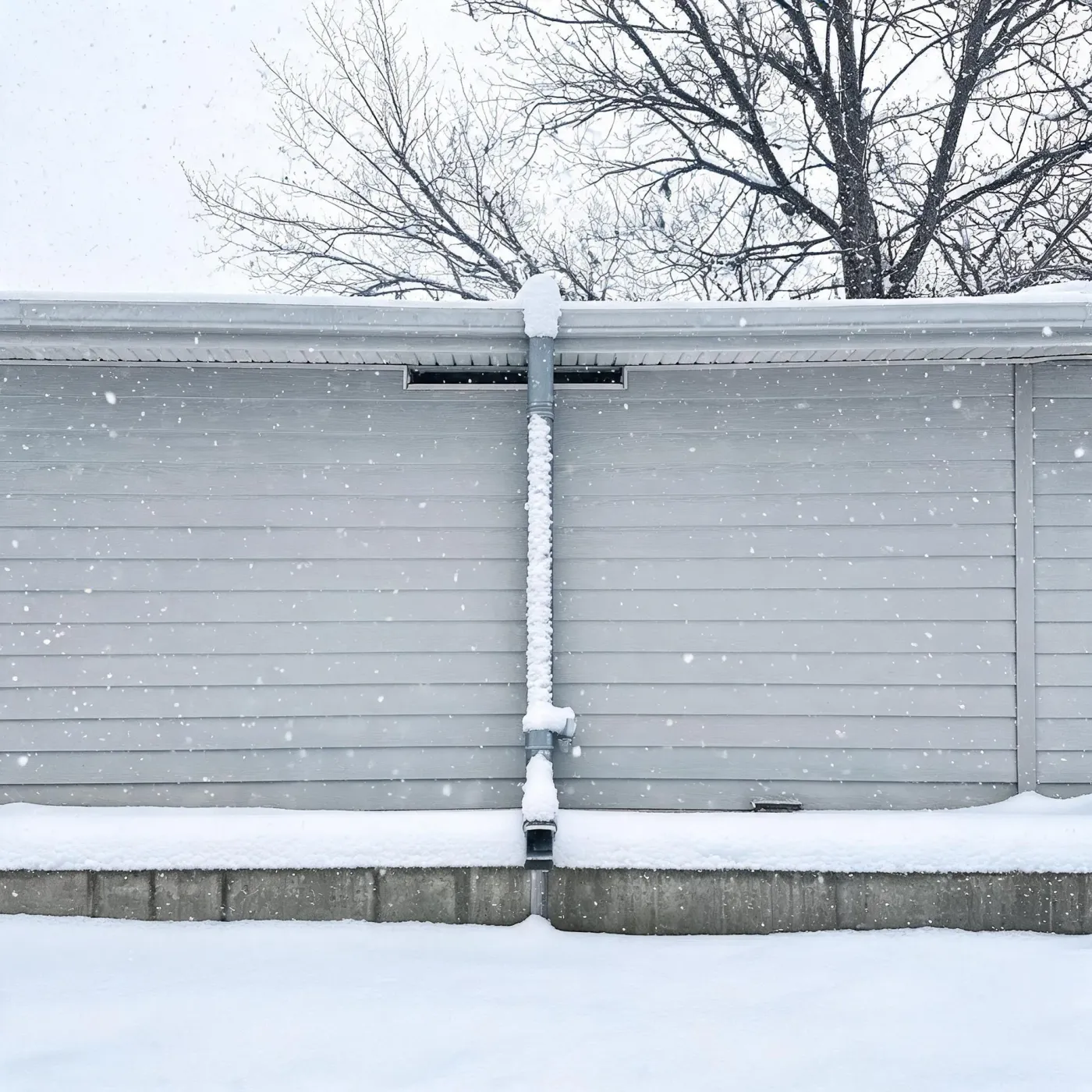
Exterior wall of a building with light gray horizontal siding and a snow-covered downspout running down its center, with bare trees behind the roofline and falling snow over deep snow on the ground.

Statewide, winter nights average 13°F, according to NOAA climate data. That's the kind of cold an aging furnace has to hold against for hours at a stretch, not just reach once and coast. A furnace with a tired blower or a weakening burner can usually still get the house warm. What it struggles with is keeping it there past midnight. If you've noticed the bedrooms colder by morning than they were at dinner, that's the furnace losing ground slowly over the night, not a thermostat problem.

NOAA nClimDiv 1991-2020 county normals weighted by homes

A closed laptop and a cream mug of coffee on a coaster sit on a dark wooden table, with a potted plant at left and a kitchen counter, tiled backsplash and shelf of ceramics in the background.

Repair it if it checks out sound. Replace it if it doesn't.

An oil furnace that's still firing clean, with a heat exchanger that checks out, is worth repairing even in its teens. One that's pushing twenty, burning more oil than it used to, or already showing a cracked exchanger is telling you where this is headed. The cold this winter doesn't wait for that decision to get easier, and at 13°F most nights, a furnace that's already struggling has nowhere to make that up.

Once you've got a straight answer on which one you're dealing with, the part that's left is finding someone who can act on it. That's normally a string of calls to oil furnace contractors, asking who actually services your town, describing the same symptoms over again to each one, then sitting with a stack of quotes trying to tell them apart. A local contractor who works on furnaces like yours all winter has usually seen your exact problem before, and you're hearing back from one person who knows the equipment, not fielding calls from five.

A living room corner with a light beige sofa holding a textured taupe cushion, a large ceramic vase of olive branches by a window, a framed neutral artwork on the wall, and a dark bowl with stacked books in the foreground.
A gas furnace with attached PVC and metal piping and sheet-metal ductwork stands on a concrete pad in a dim unfinished basement with concrete walls and exposed floor joists.

No phone calls to make

One installer gets your project, so there's no bidding war over it.

Step 1 of 3: Equipment