What temperature to set the heat in a Maine winter
A local pro who services furnaces gets in touch about the tune-up.
68 degrees is the number most people land on for a Maine winter, with a few degrees lower overnight. Your house might want 70, or hold fine at 66. That depends on how it was built and how well it keeps heat, which no two homes here do the same way.
Oil runs most furnaces in this state, and electricity to help it along costs more here than almost anywhere else. Every degree you push the thermostat up asks more of a system that is already working hard from November through March. A furnace that is clean and tuned holds a setting steadier than one that hasn't been looked at. That gap shows up on the oil bill before it shows up anywhere else.
If your furnace came with the house, or it's been a few years since anyone serviced it, that's worth finding out before the cold settles in. A tune-up now means the igniter, the burner, and the blower are doing what they're supposed to at whatever temperature you land on.
This page can tell you what's reasonable to set your thermostat to. It can't tell you what your specific furnace needs, because that depends on its age, its condition, and the house it's heating. A contractor who services furnaces in your part of Maine can look at what you have and tell you straight whether it's keeping up or struggling.
Answer the few questions below and that gets handed to a contractor who covers your area. They'll reach out to you directly. You won't need to track anyone down or spend an afternoon on the phone getting quotes. That part is off your plate once you send it.
68 degrees is where most Maine homes land for the winter, with the thermostat dropped a few degrees overnight or when nobody's home. That number isn't a rule, it's a starting point, because your furnace is working against whatever your walls and windows let go of, and that's different house to house. The reason 68 works for most people is that it's warm enough to be comfortable in a sweater without asking the furnace to run constantly to hold it. Every degree higher means longer burner cycles and more oil used to get there, which matters more here than in places where heat isn't the main cost of winter. If your house holds heat well, you might find 66 is just as comfortable. If it's drafty or the furnace struggles to keep up on the coldest nights, you may need 70 just to feel warm. Either way, a furnace that's maintained holds whatever temperature you set more steadily, and uses less oil doing it.
Before you get your furnace maintenanceAfter you get your furnace maintenance
Your thermostat doesn't control a flame directly. It reads the air around it, compares that to what you set, and tells the furnace to fire when there's a gap to close. Set it at 68 and leave it, and the burner runs in short, steady bursts all day. The oil moves through the burner, heats the exchanger, and the blower pushes that warm air into your ducts. If the exchanger is coated in soot or the filter ahead of it is clogged, the furnace has to run longer to push the same amount of heat through, even though the thermostat still reads 68. None of that depends on how high you set the number. A furnace held at a steady temperature all day isn't working as hard as one left low, then cranked up to catch up fast. And before any of it happens, the igniter has to light and the flame sensor has to confirm it's burning. If either one is worn out, the setting on the thermostat doesn't matter at all.
How your furnace reaches that number
Your furnace reads the gap between the thermostat setting and the room, then fires the burner to close it, not to hit a number on a timer.
Oil furnaces push heated air through a heat exchanger before the blower sends it into your ducts, so a dirty exchanger makes the burner run longer to reach the same setting.
Dropping the thermostat a few degrees overnight costs less than people think, because the furnace isn't fighting a wider gap when it kicks back on in the morning.
A furnace set at a steady temperature cycles on and off in short bursts, while one set low then cranked up high runs one long burn to catch up.
The igniter and flame sensor have to both work correctly for the burner to light at all, no matter what temperature you've asked for.
A clogged filter restricts airflow across the heat exchanger, which can make the furnace run longer to deliver the same heat you set.
A local pro for your furnace maintenance
One request and finding someone for the tune-up is handled.
Say what's going on with your furnace, and a pro who works on them reaches out.
A furnace that's been serviced fires clean and holds the house at 68 without the burner running longer than it should.
A furnace that's been skipped works harder for the same heat, and that moisture staining on the wall is worth a look too.
1
Thermostat calls for heat when the room drops below your setting.
2
The igniter glows and lights the burner inside the combustion chamber.
3
The burner heats the heat exchanger as oil sprays in and ignites.
4
The blower pushes air across the exchanger and out through your ducts.
Steady Heat or Nightly Setback
Set it and leave it
The furnace cycles the same way all winter, so wear on the igniter and the blower motor builds at a steady, predictable rate.
Oil use stays easier to track week to week, which matters when a delivery might be due before spring.
The house holds a steadier temperature, so floors and walls don't go through the swing of cooling down and reheating.
A furnace that isn't being pushed up and down twice a day has less reason to short cycle or trip on a fault.
There's less for anyone to remember to adjust, which matters on the mornings when leaving for work is the only thing on your mind.
Drop it overnight
Lowering the thermostat a few degrees overnight means the furnace runs less during the hours nobody's awake to feel the cold.
Oil bills reflect those unheated hours, so a household watching cost closely can see it add up over a full winter.
The furnace has to work a little harder to bring the house back up each morning, which is more demand on the burner at one time.
A home that loses heat fast through its walls or windows will feel that overnight drop more than one that holds heat well.
Pipes in an uninsulated space are more exposed to cold during the hours the thermostat is pulled down, worth checking before you set a low number.
Running the way it should
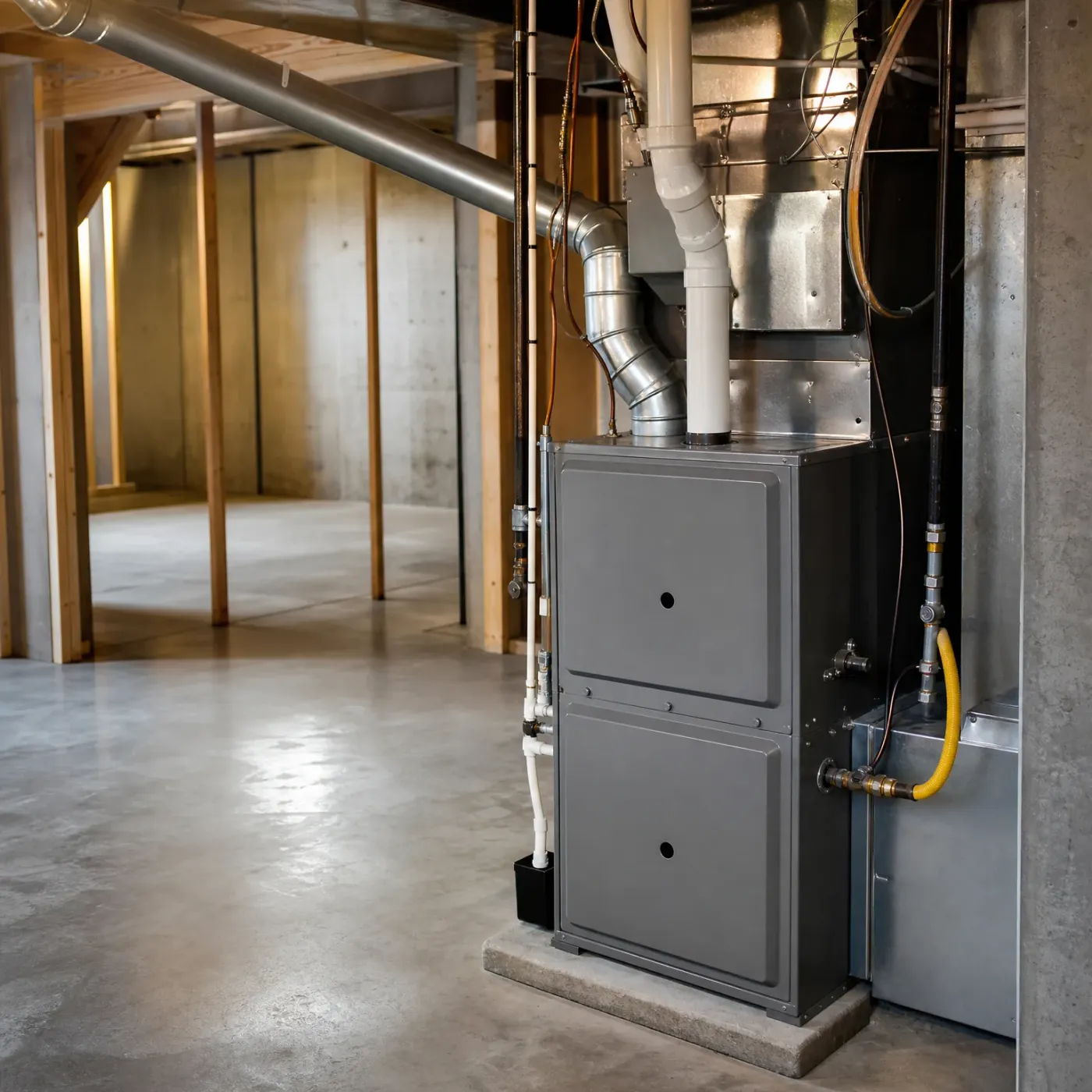
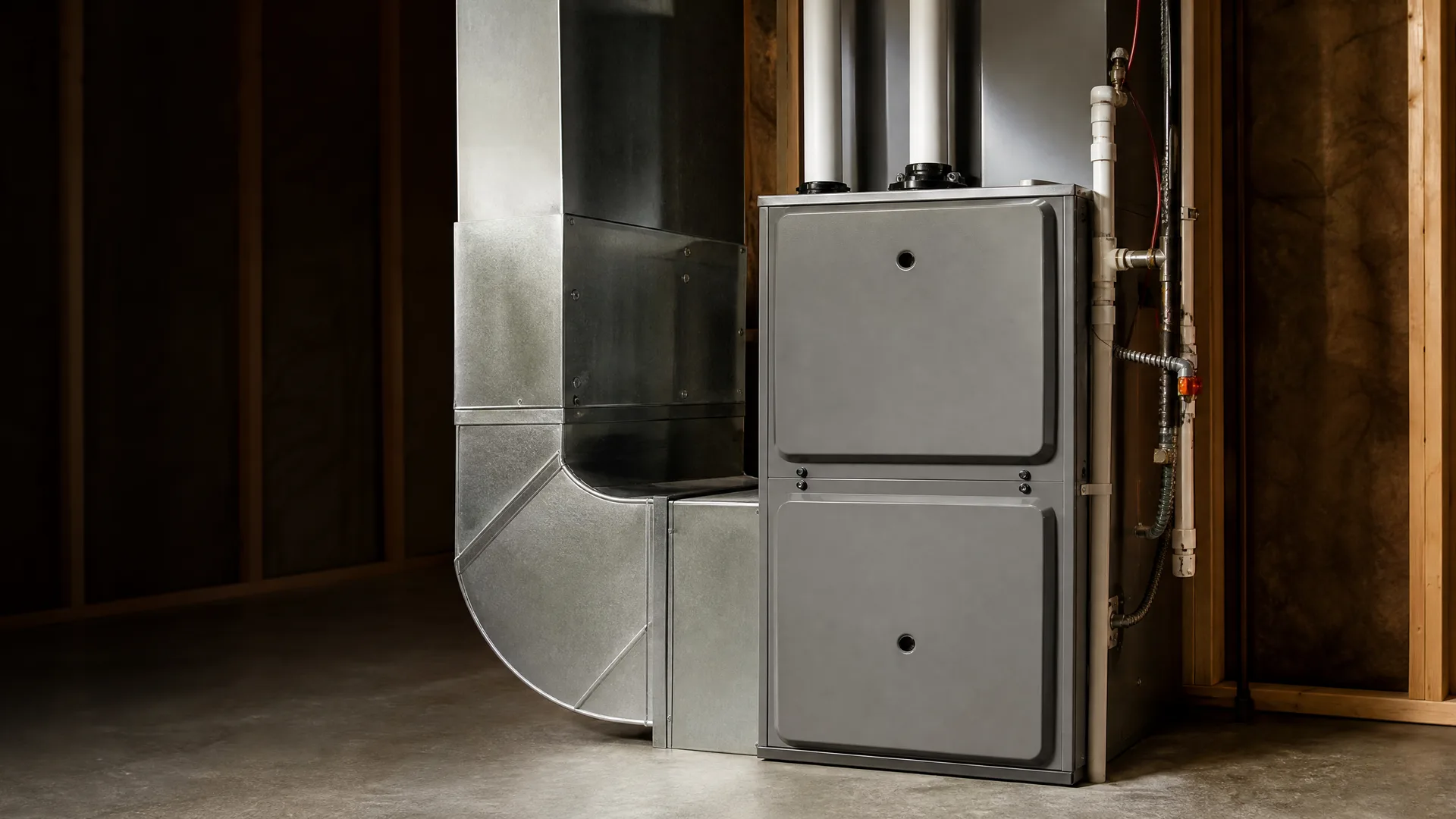
This is what a furnace looks like when it's keeping up. The flue pipes and ductwork are doing their job quietly, and the condensate pump is clearing water as fast as the unit makes it. At 68 degrees, it cycles on, satisfies the thermostat, and shuts off.
Working harder than it should
Nothing here looks wrong at a glance, but a furnace in an older mechanical room like this one often is. Gas lines, flex tubing, and condensate pipes all feed into a unit that may be straining to hold 68 instead of reaching it with room to spare.
Why does the house feel colder than the thermostat says
You set 68, but the room by the window feels more like 64. The burner is running, you can hear it kick on, but the air coming out doesn't seem to catch up. That gap usually means the furnace is working harder than it should to hit the same number, which on oil shows up fast in what gets delivered and how often. Some rooms stay warm while others don't, doors feel cold to the touch near the hinges, or the furnace runs long stretches without the house ever feeling settled. Left alone, a furnace straining like this tends to keep straining, burning more oil for the same 68 degrees all winter.
Statewide, winter nights average 13°F, according to NOAA climate data. That's the stretch your furnace has to answer every night, not just the occasional cold snap. At 13 outside and 68 inside, the burner is closing a 55 degree gap, and it does that for hours at a time instead of short bursts. You'll notice the blower running longer before it shuts off, and the oil tank dropping faster than it did in October or April. A furnace that's clean and firing right handles that gap and shuts off when it's met. One that isn't will run those same long cycles without ever quite catching up, and you'll feel it as a house that never gets past lukewarm.
NOAA nClimDiv 1991-2020 county normals weighted by homes
Winter nights average 13°F statewide
At 13 degrees outside, your furnace isn't just topping off a mild chill. It's running full cycles most of the night to hold 68. A furnace that's fallen behind on maintenance will stretch those cycles longer and burn more oil doing it.
NOAA nClimDiv 1991-2020 county normals weighted by homes
68 degrees, and a furnace that can actually hold it
That's the number. 68 during the day, a few degrees lower overnight, adjusted up or down depending on how your house holds heat. No thermostat setting fixes a furnace that's falling behind, and no setting wastes oil on its own if the furnace is running the way it should.
Whether yours is depends on things you can't see from the thermostat: the heat exchanger, the igniter, how clean the burner is firing. If you've been reading this wondering whether your own furnace is the reason the house won't quite get there, that's worth answering before the next cold snap rather than during one. A local contractor can look at what's actually happening in your system and tell you where it stands, matched to your house and what you're describing, not a general answer. Once that's underway, it's off your plate.