
Why one room stays cold in a Maine winter
A cold room usually means heat isn't reaching it, not that your furnace is failing everywhere at once. In most Maine homes that heat with oil, this comes down to a duct that's closed, crushed, or too far from the furnace to keep its air warm by the time it gets there. It can also be a radiator or baseboard loop that needs bleeding, or a thermostat located somewhere warmer than the room that's cold, so the furnace shuts off before that room catches up. Sometimes it's simpler: a vent blocked by furniture, or a door kept shut that isolates the room from the rest of the house's air. None of this means you need a new furnace. It means something specific, in that one room's path, isn't working the way it should, and a look at the ductwork, the radiator, or the thermostat placement will usually show which one.

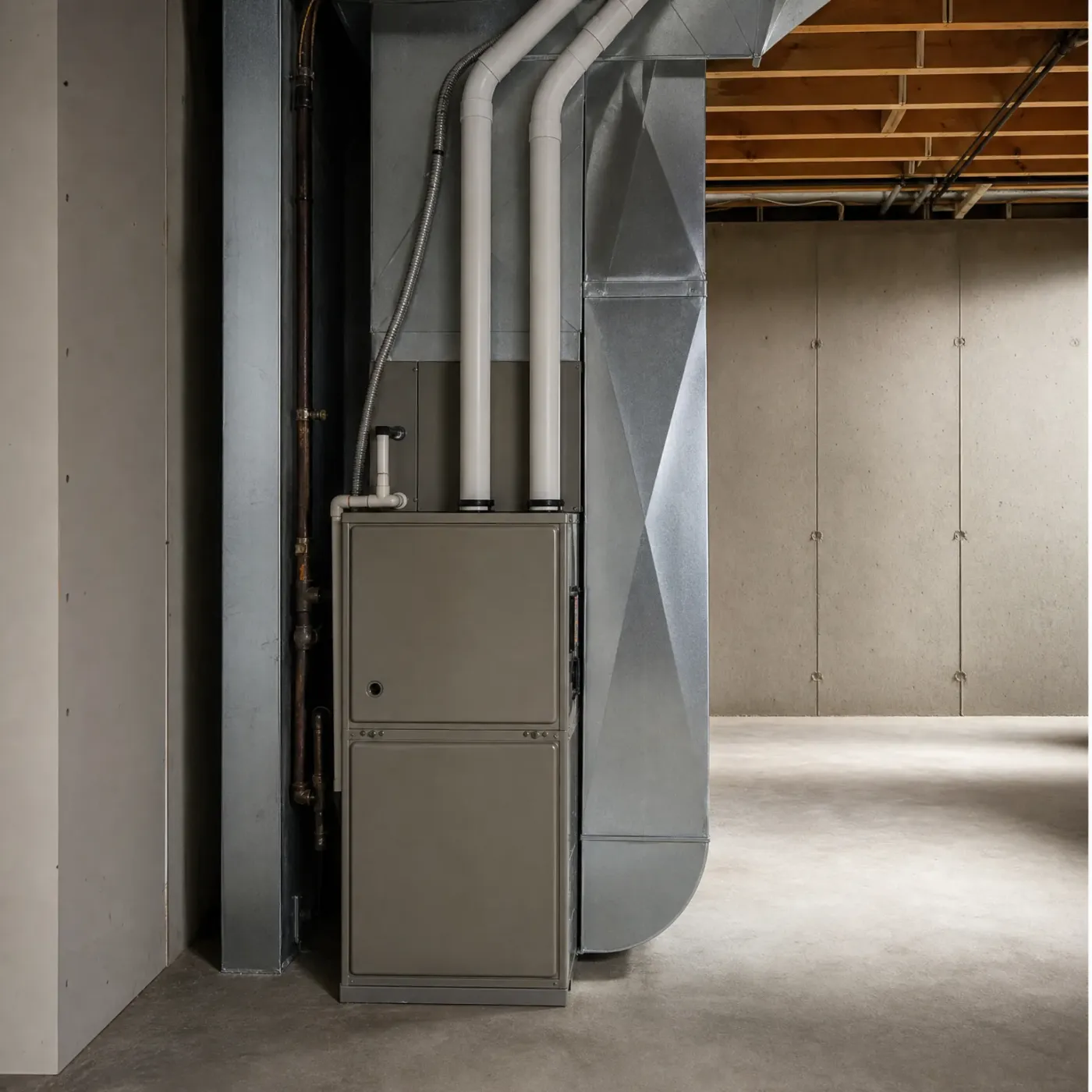
Furnace fires and pushes heated air into the main duct trunk.
Air splits off into branch ducts feeding each room.
A closed or stuck damper blocks flow to that one branch.
Long or poorly sealed duct runs lose heat before air arrives.
Is this just the one room, or is it spreading
Go stand in the room. The vent is pushing air, but it's not warm, or barely. Maybe the door stays shut most of the day and nobody's noticed until now. Check the floor near the baseboard or the wall it backs up to; if it's noticeably colder than the rest of the house, that's a duct not delivering. Listen for a rattle or whistle at the vent itself, that can mean a loose connection somewhere behind the wall. None of this means your furnace is in trouble. But a room that stays cold all winter gets damp air pulling toward it, and in a Maine January that's how pipes near an exterior wall end up at risk if the space never warms past a certain point.




Duct Issue or Furnace Issue
Duct problem
- A closed or partly closed damper in the branch line is the most common reason one room runs cold while the rest of the house is fine.
- Flexible duct can get crushed or kinked where it runs through a joist bay, cutting off most of the airflow to that one register.
- A long duct run losing heat before it reaches the room points to the duct itself, not the furnace, as the fix.
- If the vent blows air but it never warms up, the duct carrying it has a leak or a break somewhere between the furnace and that room.
- Sealing or straightening a duct run is a repair a licensed contractor can usually finish in one visit without opening up walls.
Furnace problem
- If more than one room runs cold, or the whole house struggles to hold temperature, the furnace itself is more likely the cause.
- A furnace that's short-cycling, running longer than it used to, or not reaching the thermostat setting at all points to the burner or igniter, not the ducts.
- Oil furnaces depend on a clean nozzle and a properly set burner; when those drift out of adjustment, heat output drops across the whole house.
- A furnace running weak costs more to run on oil, and with Maine power prices as high as they are, an electric backup makes that worse.
- This is a repair for the furnace itself, and it calls for someone licensed to work on oil equipment, not a duct fix.

You wake up at two, not sure why. The house is quiet. Down the hallway the floor vents sit still, no hum from below, and when you hold your hand over one there's nothing coming up. Frost has crept into the corners of the hallway window, that thin white edge it gets on the coldest nights. The hall light left on downstairs throws a dim blue glow up the stairs. You pull your sleeve over your hand and touch the vent cover. Cold metal. Somewhere below, the furnace is still running for the rest of the house. Just not for this stretch of hallway, not tonight.
Let someone else find the pro
A cold room in January with an oil furnace isn't something to leave alone and hope it sorts itself out. Oil heat here already costs enough, and a closed damper or a crushed duct run means you're paying to heat air that never reaches the room. Electric space heaters make up the difference, and with power rates in Maine among the highest around, that gets expensive fast. Finding out whether it's a damper, a duct run, or something else at the furnace itself takes someone who works on these systems through a Maine winter and knows where oil-fired forced air tends to lose its heat before it gets where it's going. Send the request and that search is off your plate. One local contractor gets your information, not five companies competing for the job, and you can get back to the rest of your house instead of standing in that cold room wondering what's wrong with it.
Why distance from the furnace matters
Heated air cools the whole way through the duct. A branch run close to the furnace delivers air still near full temperature. A branch feeding a far corner of the house loses more of that heat to the basement or crawlspace along the way, especially where the duct passes through an unheated area. If the cold room is the farthest point from the furnace, or sits above an unheated space, that distance is working against it before a damper or a crushed line even enters into it. Two rooms can be fed off the same trunk and still end up several degrees apart just from how far the air has to travel.
What a damper actually does
Most branch ducts have a small lever or wing handle where they meet the trunk line. Turned one way it sits open, turned the other it closes off most of the airflow to that one room on purpose, usually to balance heat between rooms that get sun and rooms that don't. Over a season, that lever can get bumped, or it gets left closed from last summer and never reopened. It's a five-minute check for a contractor who knows where to look on your system, but it's also easy to miss if you don't know the duct run has one at all.




Winter nights average 13°F statewide
At 13 below freezing most winter nights, any heat lost on the way to that room shows up fast as a cold floor. A duct run with a closed damper or a crushed section has to fight that cold the whole trip, and a far or poorly sealed branch loses even more before the air reaches the vent.
NOAA nClimDiv 1991-2020 county normals weighted by homes
One Room, One Fix
- One cold room with the rest of the house warm almost always traces to a duct, not the furnace itself.
- A closed damper, a crushed flex run, or a long poorly sealed branch are the usual culprits in Maine homes heated with oil.
- A furnace repair technician can trace the branch feeding that room and find exactly where the air stops or the heat drops off.
- Someone who works on oil furnaces all winter in Maine has seen which branch runs fail first and checks those before anything else.
- One licensed local contractor takes the job, so you're not fielding calls from several companies while the room stays cold.
- Once the duct problem is found and fixed, that room heats the same as the rest of the house.
The furnace isn't the problem. It's firing, it's pushing heated air into the trunk line, and every other room is proof it's doing its job. One branch is losing the fight, whether that's a damper pulled shut, a flex run crushed in a joist bay, or a long stretch of duct that gives up its heat before the air gets there. That's a duct job, not a furnace overhaul, and it's one a technician can usually trace in a single visit by following that branch from the trunk to the vent.
What makes this worth getting right is who shows up to do it. A contractor who works on oil furnaces through a Maine winter has already seen which branch runs tend to fail, where the flex duct gets pinched, which dampers get bumped shut and forgotten. That's not guesswork for someone who's traced this exact problem in houses heated the same way yours is. And it's one contractor on the job, licensed and local, not a handful of companies competing for the callback while you wait around fielding calls.
Fix the duct and the room stops being the exception. Warm air reaches it the way it reaches every other room in the house, and the furnace goes back to doing what it was already doing fine everywhere else.
One request and it's handed off
Only one pro gets your request, so you hear from one company.
You only hire the pro if you want to.