Send the request today and stop worrying about who to call.
A furnace that keeps running, that never clicks off even after the house is warm, is telling you something is wrong with how it senses heat or how it calls for more. On an oil furnace, that usually means a limit switch stuck closed or a thermostat that isn't reading the room right. Left alone, it burns oil you don't need to burn, and with Maine power rates what they are, a blower that won't stop costs you by the hour.
You don't have time to sort through which of these it is, and you shouldn't have to. What you need is someone who works on oil furnaces all winter, in Maine homes, who hears "it won't shut off" and already has two or three things in mind to check first.
That's what this gets you. Send the form and the job of finding someone comes off your plate. You're not calling around, not waiting on hold, not explaining the same problem three times to three different companies. One contractor gets your request, a licensed one working near you, someone who sees this exact furnace problem every winter and knows what tends to cause it in houses like yours.
Because it's one contractor and not a handful, you won't get flooded with calls from companies you never asked to hear from. You hear from the person who's actually going to look at your furnace.
Maine winters don't leave much room for a furnace that won't behave. A heating system stuck in the on position isn't warming anything better. It's just running past the point where it should have stopped, and that's worth getting looked at.
Fill out the form below and let the search end there.
Why won't my furnace shut off in Maine?
You've checked the thermostat and the house is warm enough, maybe too warm, but the furnace keeps firing. In a Maine winter that's not something to leave alone. Oil furnaces run long hours here, and one that won't stop burning is either wasting a lot of fuel or stuck on because something that's supposed to tell it to stop isn't working.
A stuck limit switch or a bad thermostat signal is the usual cause
Most of the time the furnace itself isn't broken, it's just not getting the signal to stop. The limit switch reads the air temperature inside the furnace cabinet and tells the burner to shut off once it's satisfied. If that switch sticks closed, the burner keeps firing no matter how warm the house gets. A thermostat that's miscalibrated or wired wrong can cause the same thing, sending a constant call for heat even after the room hits temperature. On an oil system, running flat out like this burns through fuel fast, and with Maine winters as long as they are, that adds up quickly. Either way, it's not something to wait out.
Running the way it should
A furnace that's cycling right fires, brings the house up to temperature, and shuts down on its own. The burner stops, the blower runs a little longer to clear the heat left in the exchanger, then that stops too. No burning smell, no short cycling, no running straight through the night.
Stuck on and not letting go
If the burner keeps firing after the house is warm, or the blower runs nonstop, something isn't telling the furnace to stop. A stuck limit switch, a bad thermostat connection, or a flame sensor reading wrong can all do this. Left alone, it runs up your oil use and wears the furnace harder than it should.
What a stuck limit switch does
The limit switch is supposed to read the air temperature inside the furnace cabinet and tell the burner when to stop. If it sticks closed, the furnace has no way to know it's already met the load, so it just keeps firing. Oil furnaces push a lot of heat through that exchanger in a Maine January, and a switch that won't open means that heat has nowhere to signal back. The burner doesn't know the house is warm. It only knows the switch hasn't told it to stop.
What a bad thermostat does
A thermostat calls for heat by closing a circuit, and it's supposed to open that circuit once the house reaches the set temperature. If the wiring inside has failed or the anticipator is off, that circuit can stay closed no matter what the room temperature actually is. The furnace downstairs has no way to tell the difference between a real call for heat and a thermostat that's stuck calling. It just keeps answering. That's why the house can be warm, even too warm, while the furnace runs on.
Before you get your furnace repairAfter you get your furnace repair
A furnace that won't shut off is burning oil the whole time it runs, and with oil prices what they are in Maine, that shows up fast in your tank level and your next delivery.
Left alone through a cold night, that same furnace can push the house well past comfortable and run the burner on a part that's already failing, so the fix gets more urgent, not less.
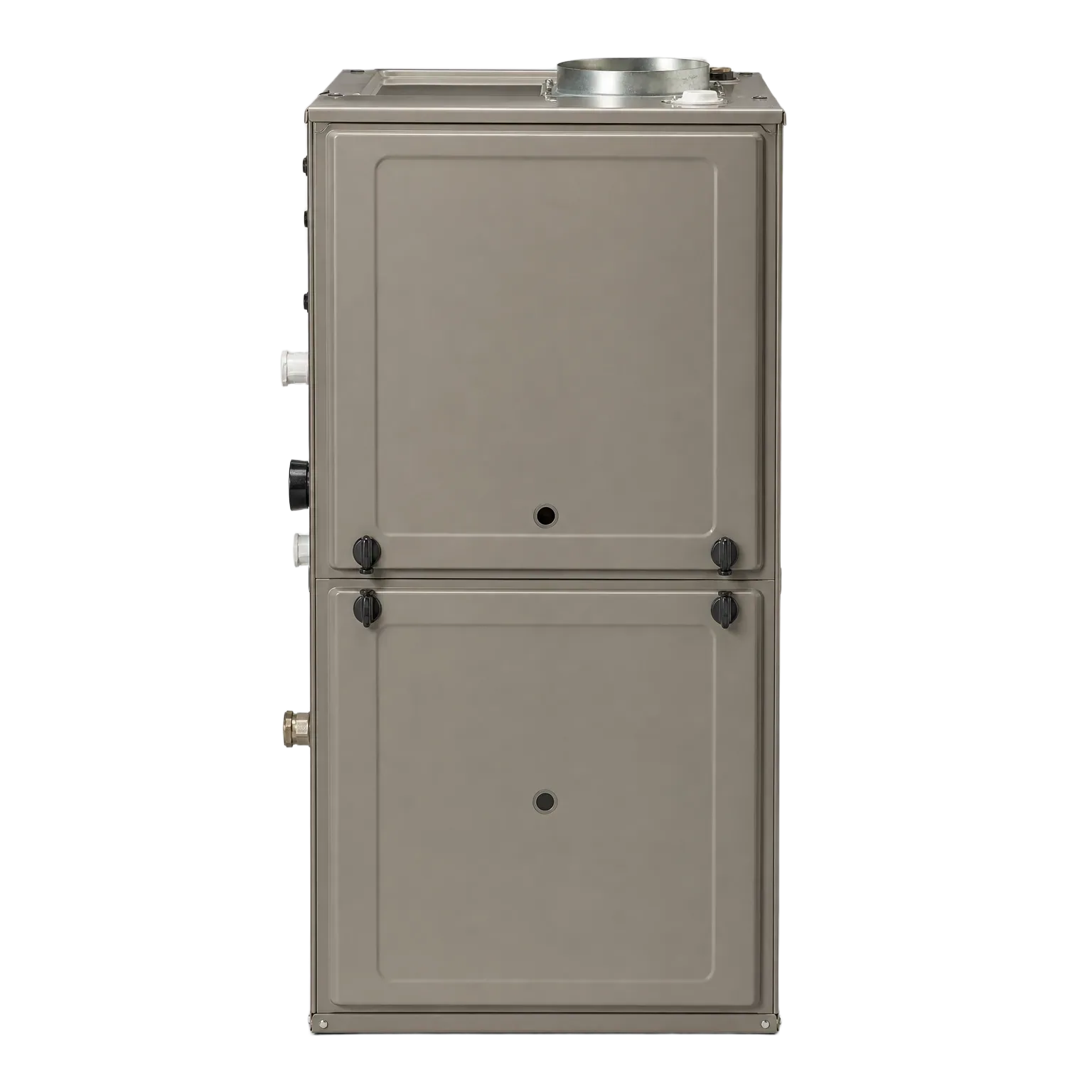
A furnace like this cycles off clean once the house hits temperature, leaving the gas lines and flue quiet.
A furnace like this keeps firing past the point it should, and the dust and age you can see often go with a limit switch that's failed.
Winter nights average 13°F statewide
At 13°F overnight, your furnace is going to run long stretches regardless. That's normal. What's not normal is it staying lit once the house has already caught up to the thermostat, night after night, on a system that's already working hard just to keep pace with that cold.
NOAA nClimDiv 1991-2020 county normals weighted by homes
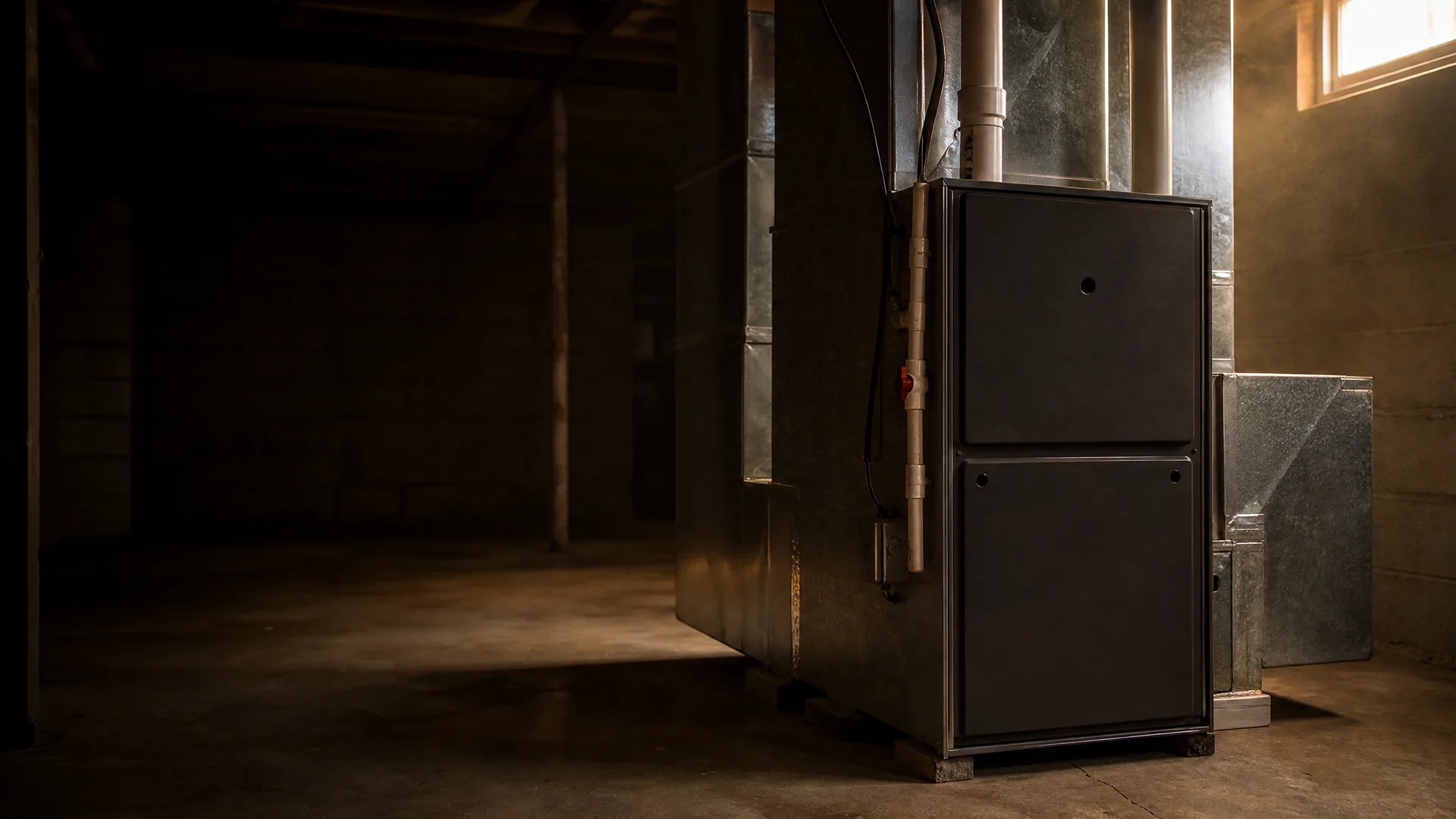
The thermostat reads warm enough, has for twenty minutes, but the furnace is still running when you go down to check it at the end of the night. The basement is cold around the edges the way it is every November, and there's a thin haze of dust hanging in the light near the cabinet, stirred up by a blower that hasn't stopped. You put your hand near the ductwork. Still hot. You've already turned the thermostat down five degrees to see if that would do anything. It didn't. Upstairs the house is fine, maybe a little too warm, and down here the furnace just keeps on, burning oil for heat nobody's asking for anymore.
Your request goes to one pro, not a list of companies.
It costs nothing to send, and you don't have to hire anyone.
Cycling off clean
This is a furnace doing what it should. It fires, warms the house, and shuts down on its own once the thermostat is satisfied. The lines and pipes around it sit quiet between cycles, and the basement stays at an even, unremarkable cold for November. Nothing here is working harder than it has to.
Stuck on
This furnace is older and it shows. The flue keeps venting past the point it should, and the valves and pipes beside it sit there doing nothing while the burner keeps firing. On a unit this age, that's often a limit switch that's quit telling the burner when to stop.
Call It In or Wait It Out
Call it in now
A furnace that won't shut off gets looked at before it does more damage to the limit switch or the blower motor.
One contractor who works oil furnaces all winter in Maine gets the form, not five companies competing for the callout.
Oil keeps burning the whole time the furnace runs, so the tank drops faster with every hour it stays lit past satisfied.
A stuck limit switch rarely fixes itself, and the furnace has no way to know it's already met the load without it.
Sending the request means the search for someone qualified is off your plate, not something you're chasing between other things tonight.
Wait and watch it
The furnace might cycle normally tomorrow, and the switch that's sticking today could free up on its own for a while.
Letting it run tonight means watching the thermostat and the basement instead of handling it once and being done.
A house pushed well past the set temperature overnight costs you oil you didn't need to burn, at prices that aren't getting cheaper.
If the limit switch is failing, it tends to get worse before it gets better, not the other way around.
Every night it runs long is another night of wear on a blower motor that wasn't built to run that hard that often.
Winter nights here average 13°F statewide, according to NOAA climate data, and that's the temperature your furnace is working against for hours at a stretch. At 13 degrees, a furnace that's running right still runs long. That part's expected. What it shouldn't do is stay lit once the house has already caught up, burning oil for heat nobody needs. A stuck limit switch doesn't know the difference between a cold night doing its job and a warm house it's ignoring. On a night this cold, that's hours of oil going somewhere past the point of comfort, and a tank level that drops faster than the weather alone explains.
NOAA nClimDiv 1991-2020 county normals weighted by homes
A furnace that cycles off is telling you nothing's wrong. A furnace that won't is telling you something needs attention before it wears down a part that's already struggling. That's the whole answer: stuck limit switch, bad thermostat call, or a furnace that's been running too hard for too long. Someone who works on oil furnaces all winter in Maine has seen this exact fault more times than most homeowners will in a lifetime, and knows which of those three it usually turns out to be before they even open the cabinet. You'll get one contractor, local to you, licensed to do the work, not a handful of strangers calling back about the same form. Send it and the search for who's going to fix this stops being yours to carry. The furnace keeps running until someone who knows what they're looking at tells it to stop, and that's a short wait compared to another night of it burning oil it doesn't need to burn.
Furnace Repair
Stop chasing a furnace pro
Step 1 of 3: Equipment
Tell a local repair pro what your furnace is doing.
Say what's going on with your furnace, and a pro who works on them reaches out.
One request and the search for a pro is handled.
Send it once and finding someone is no longer on you.
Describe what your furnace is doing once, in one form.
Answer a few questions instead of calling shop after shop.
Only one pro gets your request, so you hear from one company.