Tell us about the job
Takes about a minute. No obligation.
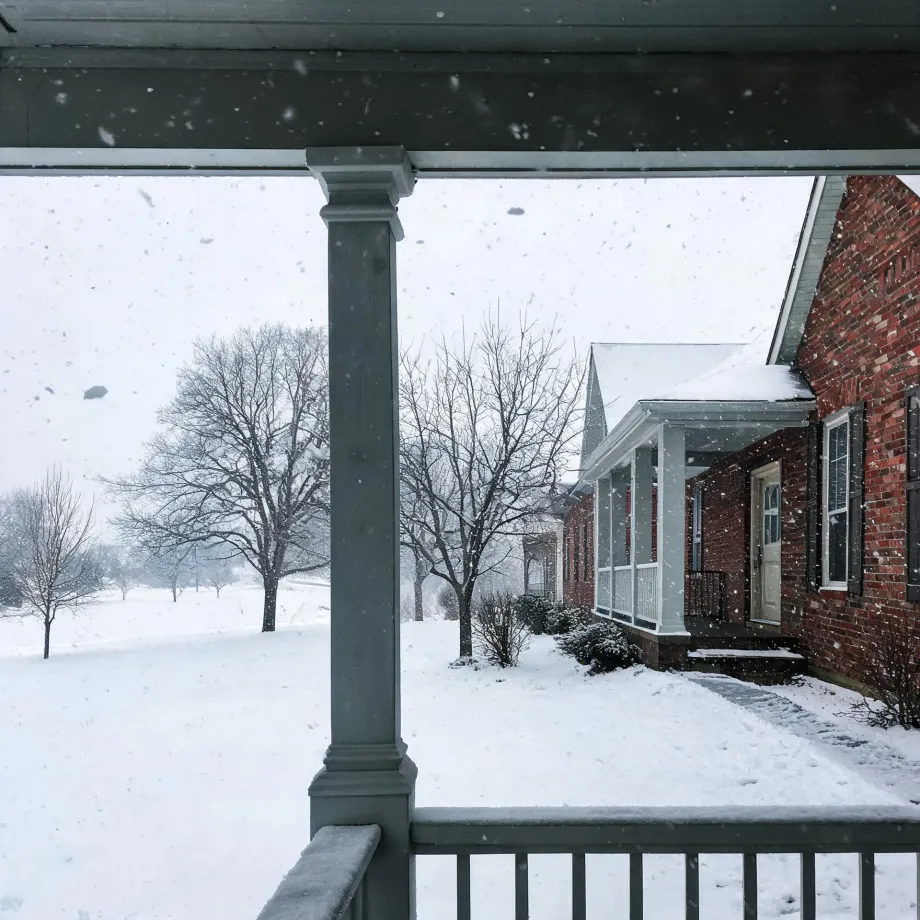
A furnace here cycles through a long working year, and the burner assembly, heat exchanger, and ignition system absorb every one of those cycles. Homes in Knox County, ME run heat about nine months a year, from September through May. By late winter, an igniter that was marginal in the fall has been firing repeatedly for months, and that cumulative wear is what a contractor finds when a furnace stops lighting reliably. Cracks in the heat exchanger also develop under sustained thermal stress, not from a single failure event. A repair quote in Knox County starts with those components.
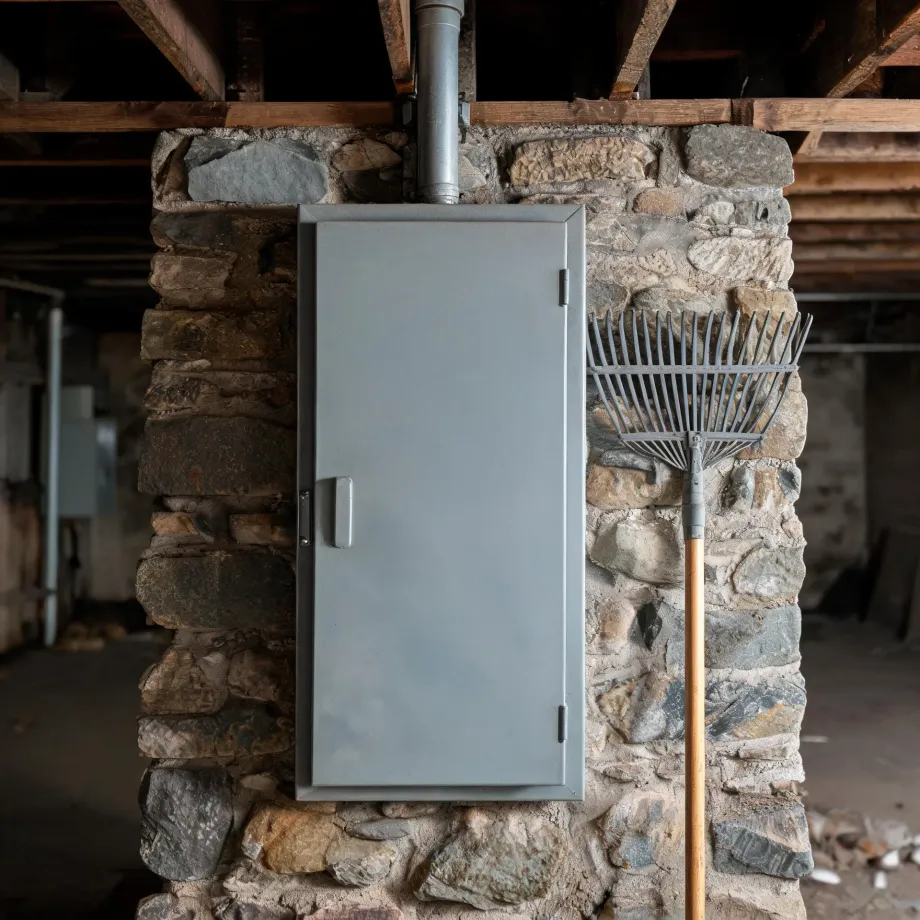
Ductwork put in for one furnace and pressed into service for another, years later, is not the variable that holds up a furnace repair. The part the opened unit needs is. Half the homes in Knox County, Maine were built in 1974 or earlier (2020-2024 ACS 5-year). That spread of housing age means contractors here regularly open furnaces whose heat exchangers, gas valves, or ignition assemblies belong to product lines that have since been revised or discontinued, which shifts the repair from a parts lookup into a sourcing problem. What the contractor finds inside, and whether a supplier still stocks it, is what decides the scope.
The Parts of a Furnace a Contractor Checks First
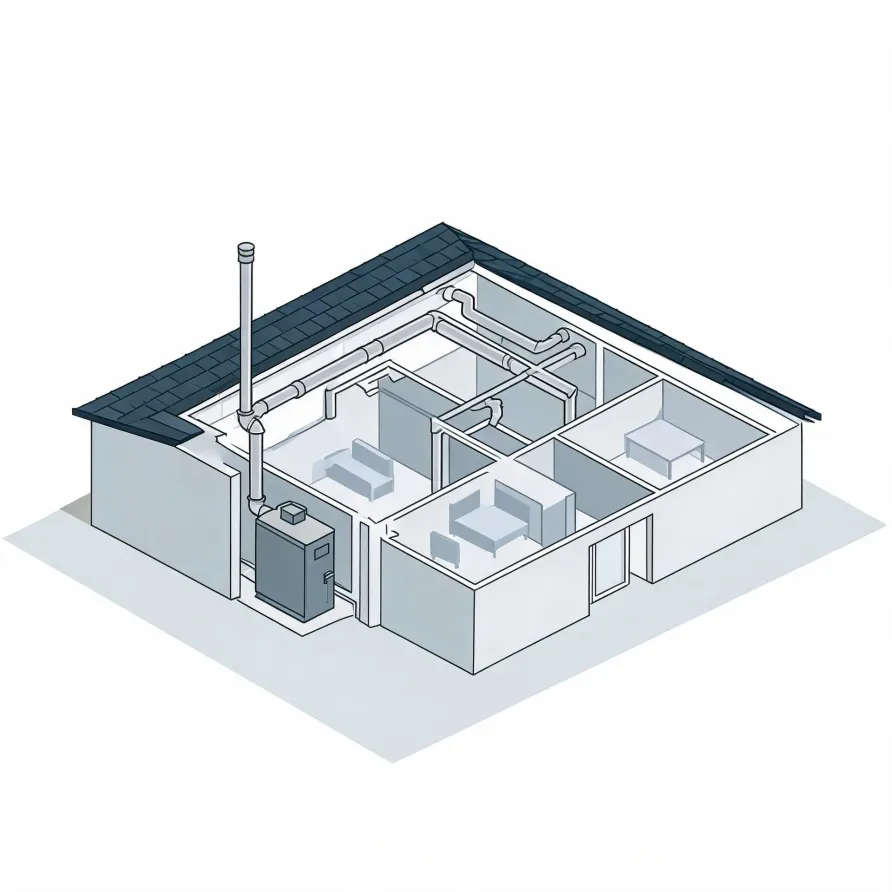
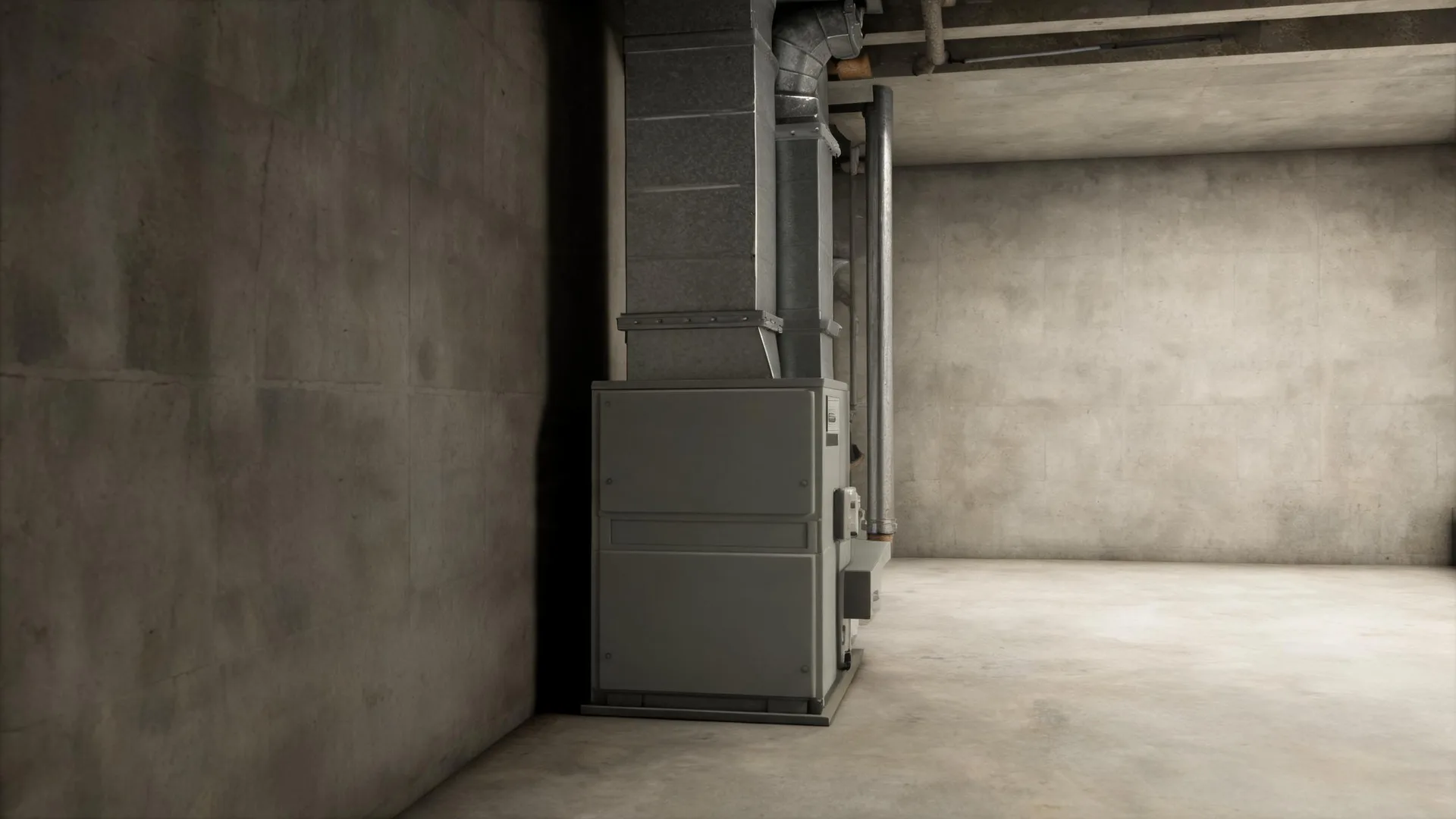
The furnace itself sits in a basement, utility closet, or mechanical room and is the piece a contractor goes to first. Inside it, the heat exchanger is the part most worth understanding: a crack or failure there is what pushes a repair from minor to urgent. The burners, the igniter, and the flame sensor all live inside that cabinet too, and any one of them can be the reason a furnace stops producing heat.
The blower motor sits at the base of the furnace and moves conditioned air into the duct system. The flue pipe runs from the furnace up and out of the house, and a contractor checks it because a blocked or corroded flue affects both safety and function. The thermostat on the wall is the last piece in the chain, and intermittent or failed signals from it can look exactly like a furnace problem.
The drawing shows a typical layout, and a licensed contractor determines which parts apply and what condition they are in for your specific home.
Find a contractor in Knox CountyKnox County, Maine, by the numbers
71 severe weather events were recorded in Knox County, Maine between 2015 and 2024.
NOAA National Centers for Environmental Information, Storm Events Database, bulk CSV export, events 2015-01-01 through 2024-12-31.Half the homes in Knox County, Maine were built in 1974 or earlier (2020-2024 ACS 5-year).
U.S. Census Bureau, 2020-2024 American Community Survey 5-Year EstimatesKnox County, Maine holds 24,564 housing units (2020-2024 ACS 5-year).
U.S. Census Bureau, 2020-2024 American Community Survey 5-Year EstimatesOwners occupy 78.7% of the occupied homes in Knox County, Maine (2020-2024 ACS 5-year).
U.S. Census Bureau, 2020-2024 American Community Survey 5-Year EstimatesCodes & Standards Governing Furnace Repair in Knox County, Maine5 sourced rules and standards
What HVAC Repair Looks Like in Knox County
Non-weatherized gas furnaces manufactured on or after November 19, 2015 must reach 80.0 percent AFUE.
Non-weatherized oil-fired furnaces manufactured on or after November 19, 2015 must reach 83.0 percent AFUE.
Mobile home gas furnaces manufactured on or after November 19, 2015 must reach 80.0 percent AFUE.
Non-weatherized gas furnaces manufactured on or after December 18, 2028 must reach 95.0 percent AFUE, up from the 80.0 percent minimum that applies to units manufactured before that date.
Licensing and Legal Requirements in Knox County, Maine
Maine licenses the fuel-burning side of heating rather than HVAC as a trade: a Maine Fuel Board licence is required to install or service solid fuel, oil, propane or natural gas burning equipment, including pellet-fired central heating appliances. Air conditioning is not named anywhere in the chapter.
Severe Weather Events in Knox County
Heating equipment in Knox County works against whatever the climate throws at it, and hard weather accelerates wear on components that run long hours under load. How often conditions push a furnace to its limits is a local fact, and local repair demand follows from it.
71 severe weather events, 2015–2024. Source: NOAA National Centers for Environmental Information, Storm Events Database.