Tell us about the job
Takes about a minute. No obligation.
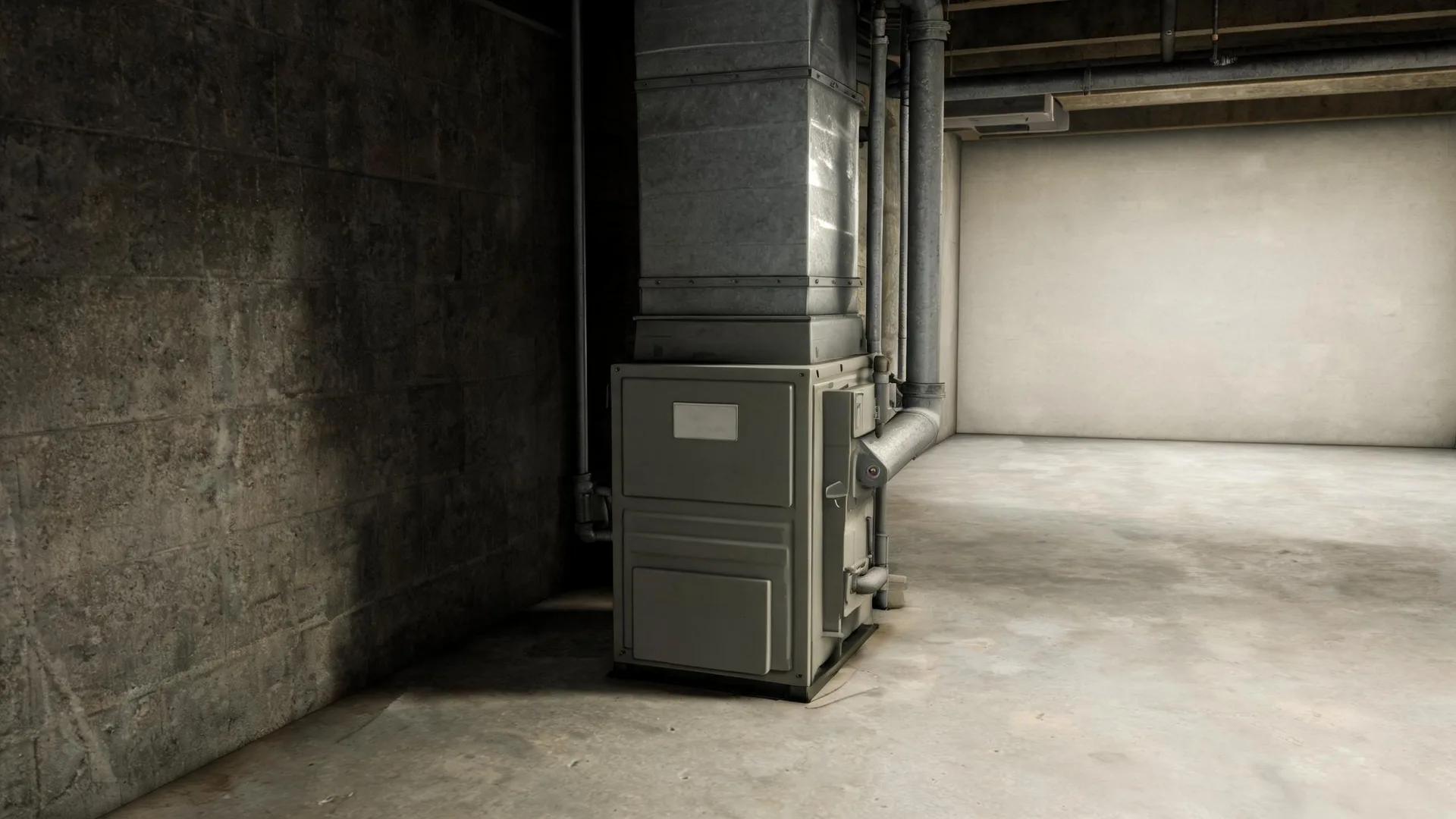
A furnace running a long heating season puts its burner, heat exchanger, and ignition system through cycle after cycle with little idle time in between. Homes in Hancock County, ME run heat about nine months a year, from September through May. That load falls unevenly on parts: the igniter and flame sensor take the full count of every start, while the heat exchanger is under thermal stress each time the burner fires and cools. A contractor diagnosing a furnace repair here checks those components before anything else, because they fail first under sustained use.
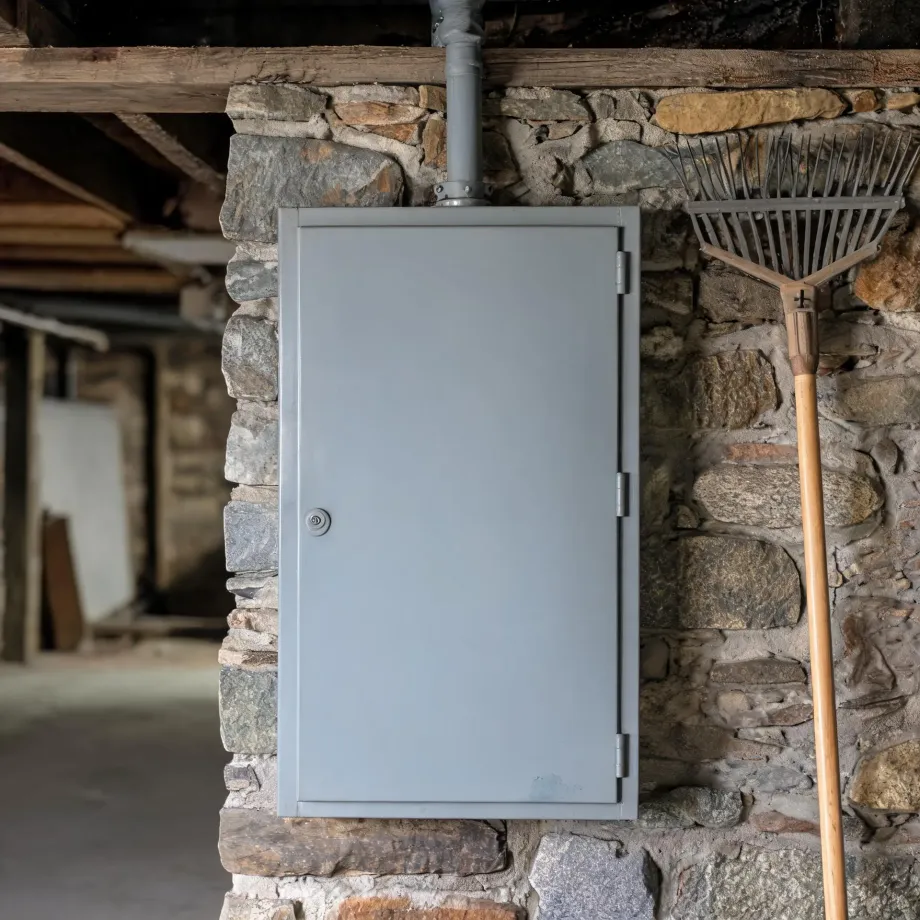
Furnace repair in housing built to serve older equipment is a parts problem as much as a labor problem. Half the homes in Hancock County, Maine were built in 1982 or earlier (2020-2024 ACS 5-year). A contractor who opens a furnace here has to establish whether the components it needs are still in production, and sourcing becomes the variable that decides how long a repair takes and what it costs. Heat exchangers, draft inducers, and control boards for systems of this vintage are not always on a distributor's shelf. That gap between what the house was built around and what eventually replaced it is where repairs stall.
The Parts of a Furnace a Contractor Checks First
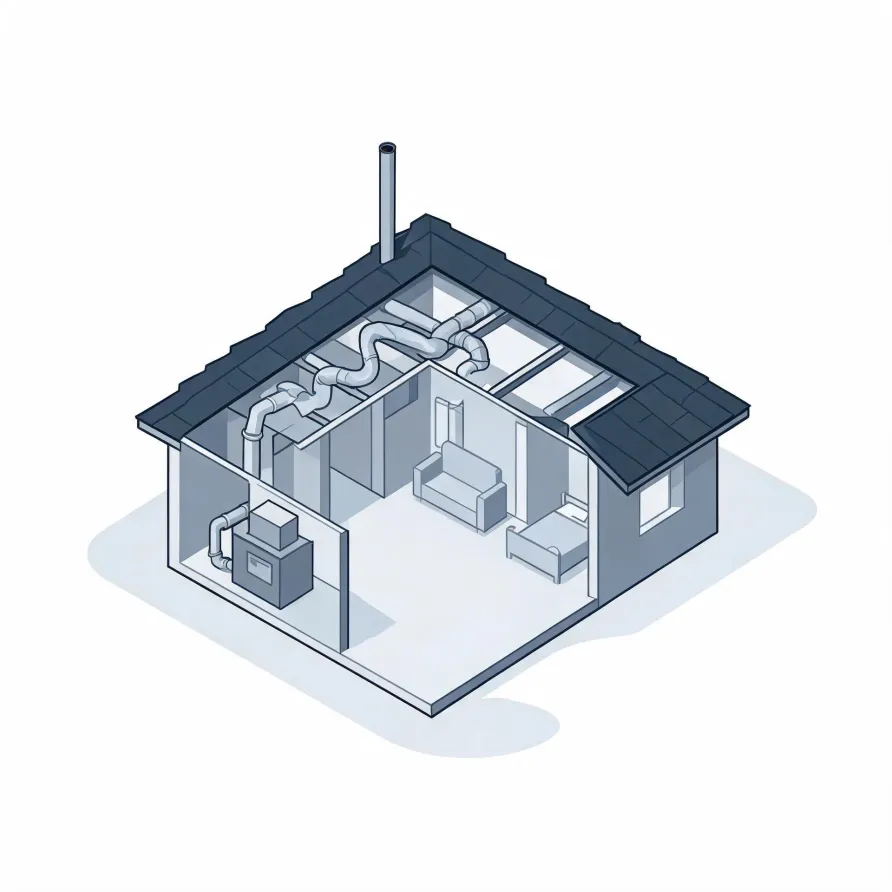
The furnace itself sits in the basement, utility room, or crawlspace and is where heat is produced. Inside it, the heat exchanger is the piece a contractor looks at closely during a repair call, because cracks or corrosion there affect both performance and safety. The burners, which fire inside that exchanger, are another early stop.
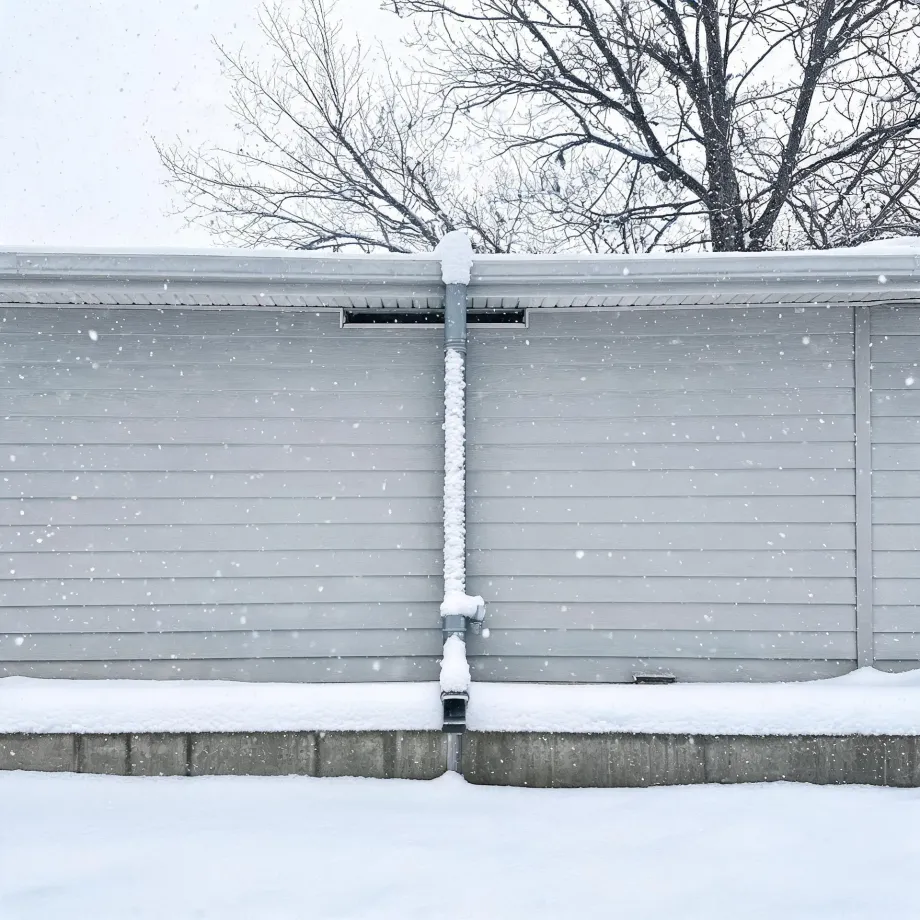
The blower motor and fan assembly sit at the base of the furnace cabinet and push conditioned air out through the supply side of the house. The flue or exhaust vent runs from the top of the cabinet up and out of the structure, and problems there show up as ignition failures or unsafe backdrafting. The thermostat, mounted on a wall inside the living space, is where a contractor often starts, since a wiring or calibration fault there can look like a furnace problem.
The drawing shows a typical layout, and a licensed contractor determines which components apply to your specific system and home.
Find a contractor in Hancock CountyHancock County, by the numbers
155 severe weather events were recorded in Hancock County, Maine between 2015 and 2024.
NOAA National Centers for Environmental Information, Storm Events Database, bulk CSV export, events 2015-01-01 through 2024-12-31.Half the homes in Hancock County, Maine were built in 1982 or earlier (2020-2024 ACS 5-year).
U.S. Census Bureau, 2020-2024 American Community Survey 5-Year EstimatesHancock County, Maine holds 40,765 housing units (2020-2024 ACS 5-year).
U.S. Census Bureau, 2020-2024 American Community Survey 5-Year EstimatesOwners occupy 78.5% of the occupied homes in Hancock County, Maine (2020-2024 ACS 5-year).
U.S. Census Bureau, 2020-2024 American Community Survey 5-Year EstimatesCodes & Standards Governing Furnace Repair in Hancock County, Maine5 sourced rules & standards
What the repair visit looks like
Non-weatherized gas furnaces manufactured on or after November 19, 2015 must reach 80.0 percent AFUE.
Non-weatherized oil-fired furnaces manufactured on or after November 19, 2015 must reach 83.0 percent AFUE.
Mobile home gas furnaces manufactured on or after November 19, 2015 must reach 80.0 percent AFUE.
Non-weatherized gas furnaces manufactured on or after December 18, 2028 must reach 95.0 percent AFUE, up from the 80.0 percent minimum that applies to units manufactured before that date.
Licensing and Legal Requirements in Hancock County, Maine
Maine licenses the fuel-burning side of heating rather than HVAC as a trade: a Maine Fuel Board licence is required to install or service solid fuel, oil, propane or natural gas burning equipment, including pellet-fired central heating appliances. Air conditioning is not named anywhere in the chapter.
Severe Weather Events in Hancock County
Hard weather puts hours on a furnace fast, running it longer and harder than a mild season ever would. How much of that your equipment carries depends on what this area actually sees.
155 severe weather events, 2015–2024. Source: NOAA National Centers for Environmental Information, Storm Events Database.